Capital Markets
Breakout Ventures Launches $114M Fund III to Double Down on Deep Tech
From Breakout Labs to a $114 million third fund, Breakout Ventures has spent a decade proving that deep-tech venture investing delivers. Their portfolio spans AI-powered diagnostics, sustainable aviation fuel, neural interfaces, and fossil-free materials — with real exits and partnerships to show for it. Fund III is now deploying into the next generation of science-driven founders.
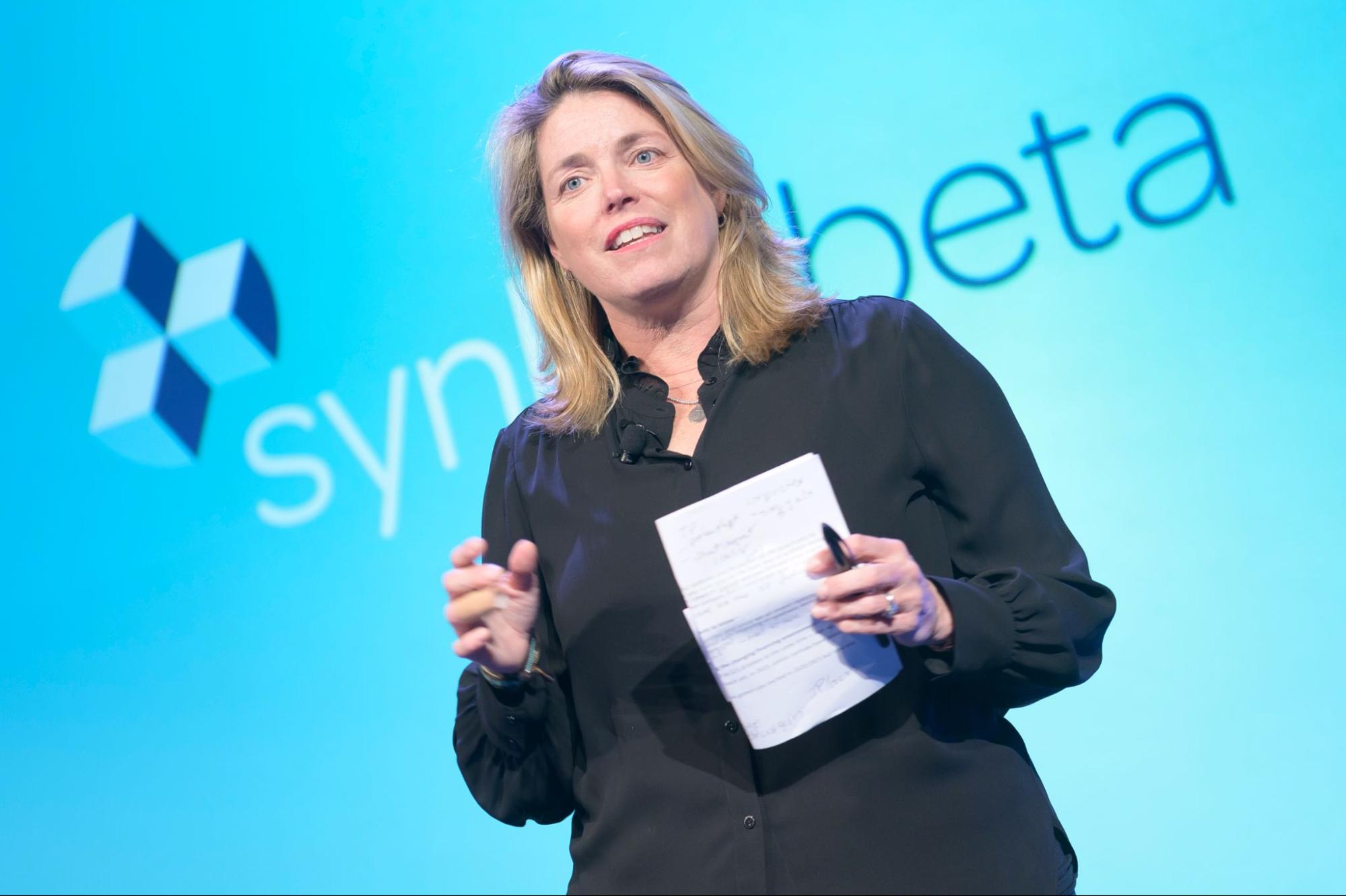
In an exclusive conversation ahead of their appearance at SynBioBeta 2026 next May in San Jose, the managing partners of Breakout Ventures outlined their thesis for a new era of science-driven venture investing. The San Francisco firm has just launched a $114 million third fund, its largest to date, backed by returning investors and new limited partners including JIMCO and Korea Omega Investment Corporation. The milestone comes at a moment of real inflection for the bioeconomy, and one Breakout believes it is well positioned to capture.
Breakout Ventures grew out of Breakout Labs, a program launched more than 15 years ago when, as the partners describe it, “scientist-entrepreneurs had very little support to scale and commercialize breakthroughs.” Managing Partner Lindy Fishburne and co-lead Julia Moore watched the ecosystem evolve dramatically “from access to shared lab space, to tech transfer policies at universities, to the quality of entrepreneurs building in this space, to the lift technology is bringing.”
With those shifts making the opportunity more investible, the firm launched its first venture fund in 2016, convinced that the convergence of biology, chemistry, and computation would produce a generation of category-defining companies. A decade later, that conviction has only strengthened.
The track record supporting that philosophy is becoming difficult to ignore. Fund I has already returned capital to investors and includes standout investments like Cytovale’s AI-enabled sepsis diagnostic and Twelve’s sustainable aviation fuel derived from captured CO₂.
Fund II, announced in 2021, is building comparable momentum. Portfolio company Surf Bio was recently acquired by Halozyme for up to $400 million. Noetik signed a landmark $50 million partnership with GSK to license its AI-driven virtual cell models. Phantom Neuro, which holds FDA Breakthrough Device Designation for its neural interface technology, recently opened a patient registry to connect amputees with future clinical trials. Meanwhile, ZymoChem is scaling fossil-free polymer production with partners such as Lululemon. Together, these companies illustrate both the breadth and the commercial traction of Breakout’s thesis.
Fund III is already being deployed. One disclosed investment is Reach Industries, a startup founded by serial entrepreneurs that is building what it calls a visual intelligence layer for regulated environments using agentic computer vision. Two additional companies remain in stealth. Breakout’s strategy remains to make high conviction investments, with investments typically ranging from $500,000 to $5 million in exchange for meaningful ownership.
Looking ahead, the partners see several areas where scientific and technological shifts are opening new opportunities. Artificial intelligence, they argue, is fundamentally changing the economics of science by allowing companies to create value faster and with less capital than traditional life sciences ventures have required. Predictive biological models, from organoids to virtual cells and digital twins, could reduce the industry’s reliance on costly and unreliable animal testing. At the same time, multimodal biomarkers are beginning to unlock new therapeutic strategies for neurodegenerative diseases. And growing geopolitical concerns around minerals and materials supply chains are creating opportunities for founders developing technologies to reshore critical production.
“It all starts with an exceptional founding team, combining technical depth and special insight into the market they are building for,” Fishburne said. “Only truly differentiated technology can survive the ups and downs of market volatility.”
For builders and investors across the bioeconomy, the central question has long been whether deep-tech venture investing can deliver consistent, scalable returns. Breakout’s Fund III, combined with the exits and partnerships emerging from its earlier funds, suggests that answer may increasingly be yes.
“The founders we back are doing the most valuable work in science and technology today: translating scientific innovation into companies that can scale to change our future,” said Julia Moore, Managing Partner at Breakout Ventures. “That takes more than capital. It takes first true believers with the expertise, the network, and the conviction to help make it real. That's exactly what we've built at Breakout, and Fund III is our most ambitious chapter yet.