Biomanufacturing Scale Up
Ai Digital Biology
Ginkgo Joins Genesis Project to Build a $47 Million Autonomous Robot Lab
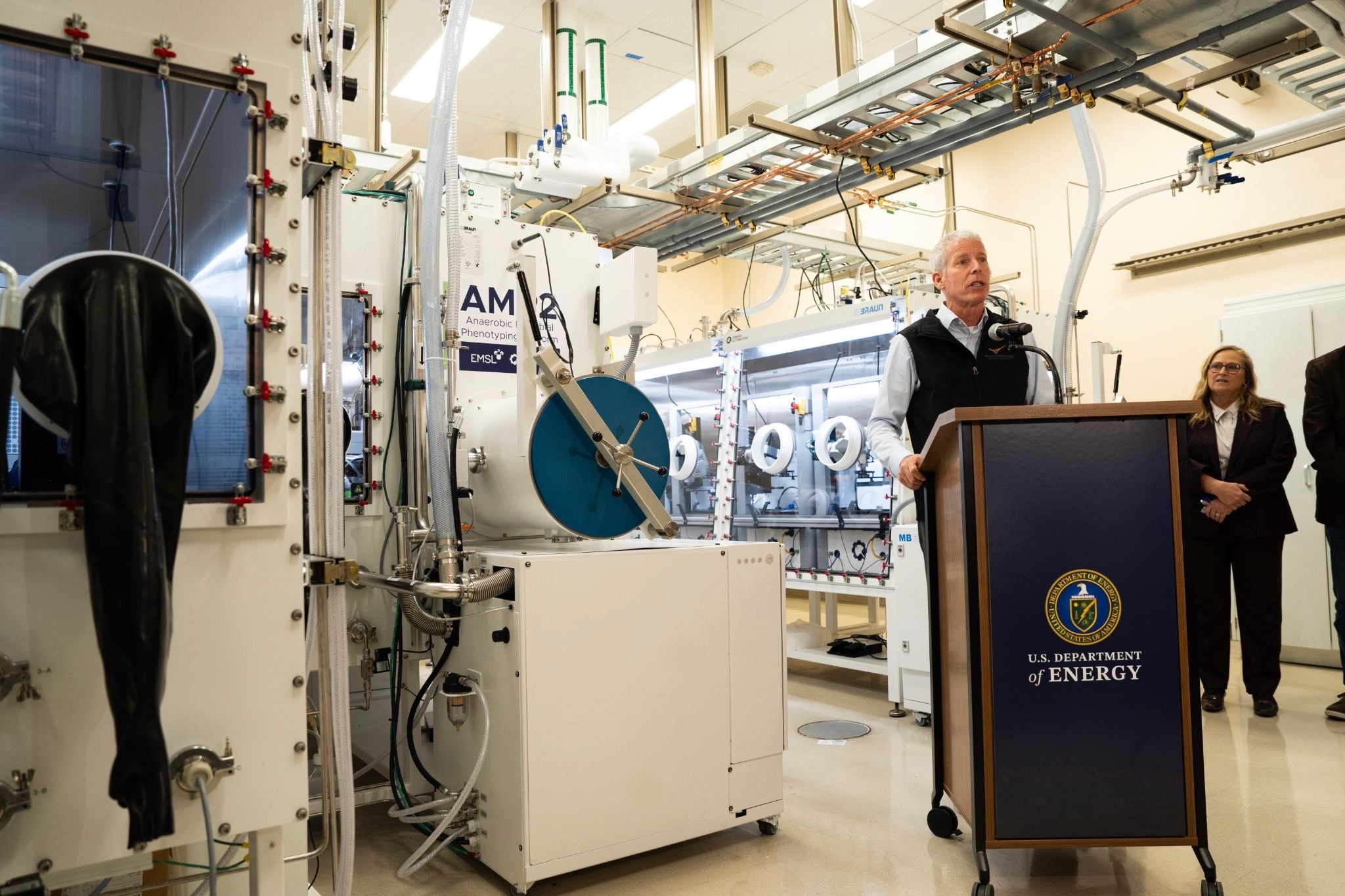
Image from the U.S. Department of Energy
If sequencing defined the last era of biology, automation will define the next. A generation from now, biologists will not think of experiments as something performed by hand, but as something requested and executed automatically in autonomous labs. Ginkgo Bioworks bet early on this, and it’s paying off. The company recently announced a $47 million deal to build M2PC and $4.6 million to build AMP2, fully autonomous microbial labs at Pacific Northwest National Laboratory (PNNL), marking one of the first initiatives tied to the White House’s Genesis Mission Executive Order.
“In the past, when you’d talk about lab automation, you’d think of walk-up automation or maybe automating a specific protocol or two on a workcell,” Kelly said. “Instead of just lab automation, we can now talk about the autonomous lab.”
AMP2’s debut comes only days after the executive order launching the Genesis Mission, a federal push to combine data, supercomputers, and AI-driven robotic laboratories. Specifically, the order directs the Department of Energy to build robotic laboratories and production facilities for AI-directed experiments and manufacturing. The PNNL projects are among the first concrete examples of this mandate.
AMP2 is the first of two major autonomous labs that Ginkgo Bioworks will build at Pacific Northwest National Laboratory. Under a $4.7 million contract, the company has installed 14 lab robots and 18 instruments inside a modular, anaerobic workcell at PNNL’s Environmental Molecular Sciences Laboratory. A second award of $47 million will fund a much larger Microbial Molecular Phenotyping Capability, or M2PC, that will house 97 robots and more than 100 instruments by 2030. Together, the paired facilities are meant to push a new era of AI-enabled discovery in the US bioeconomy and to demonstrate what an autonomous lab looks like at national lab scale.
“This is about getting autonomous labs into the hands of scientists,” Ginkgo cofounder and CEO Jason Kelly said. “Autonomous labs allow scientists to order experiments by asking for them, with AI agents managing the hard parts of onboarding protocols and running many protocols at once.”
These investments also fit a broader pattern for Ginkgo, which has frequently been called on for national biodefense and biosecurity projects, including BARDA’s BioMaP consortium. “These two autonomous labs will help be sure the United States wins the race in science and for the bioeconomy,” Kelly said during the DOE event, adding that the Genesis Mission “could be as important as the Manhattan and Apollo projects in securing US leadership of the future.”
AMP2 itself is relatively compact, a 1,800 square foot laboratory inside EMSL that focuses on anaerobic microbes, the bacteria and fungi that thrive in oxygen-free environments and underpin processes from chemical and fuel production to critical mineral recovery and nuclear waste management.
Working in those environments is notoriously difficult for humans. Ginkgo’s system wraps 14 Reconfigurable Automation Carts (RACs) and 18 instruments in a modular anaerobic chamber, allowing robots to handle samples, mix media, and shuttle plates between instruments without breaking the oxygen-free seals. EMSL scientists and external users will be able to log in remotely, queue up complex phenotyping workflows, and monitor experiments in real time.
M2PC is the scale-up. Planned as a 32,000 square foot facility within EMSL, it will house more than 100 analytical instruments and 97 RACs. DOE expects to break ground next year and open the user facility by 2030
The PNNL platforms are thanks to the long-running investments in Ginkgo’s automation stack. Reconfigurable Automation Carts are standardized automation units that each combine a piece of lab equipment, a six-axis robot arm, and a maglev track for sample movement. Carts are modular blocks that can be snapped together to build larger systems, from in-house workcells at Ginkgo’s Boston foundry to multi-robot platforms such as AMP2 and the planned M2PC. On top of that hardware sits Catalyst, a web-based control system designed to plug into AI agents and schedulers.
Kelly is quick to note that this moment has been almost two decades in the making. “Our work on automating lab work for the better part of 20 years got us here,” he said. “We have earned the right to build it through years of trial and error, experimentation, and grit.”
Both AMP2 and M2PC will operate as user facilities through EMSL, open to academic and industry teams that successfully compete for access. That model turns PNNL into an autonomous resource for the broader community and positions the resulting datasets as shared infrastructure for the Genesis Mission’s American Science and Security Platform.
If the broader vision pans out, biologists may one day spend no time on pipetting and protocol debugging and fully dedicate themselves to more important problems and analysis. For now, AMP2 is a concrete start. It is Genesis in miniature, robots and microbes in a sealed room in eastern Washington, testing whether autonomous labs can deliver on a promise for the automated biology of tomorrow.
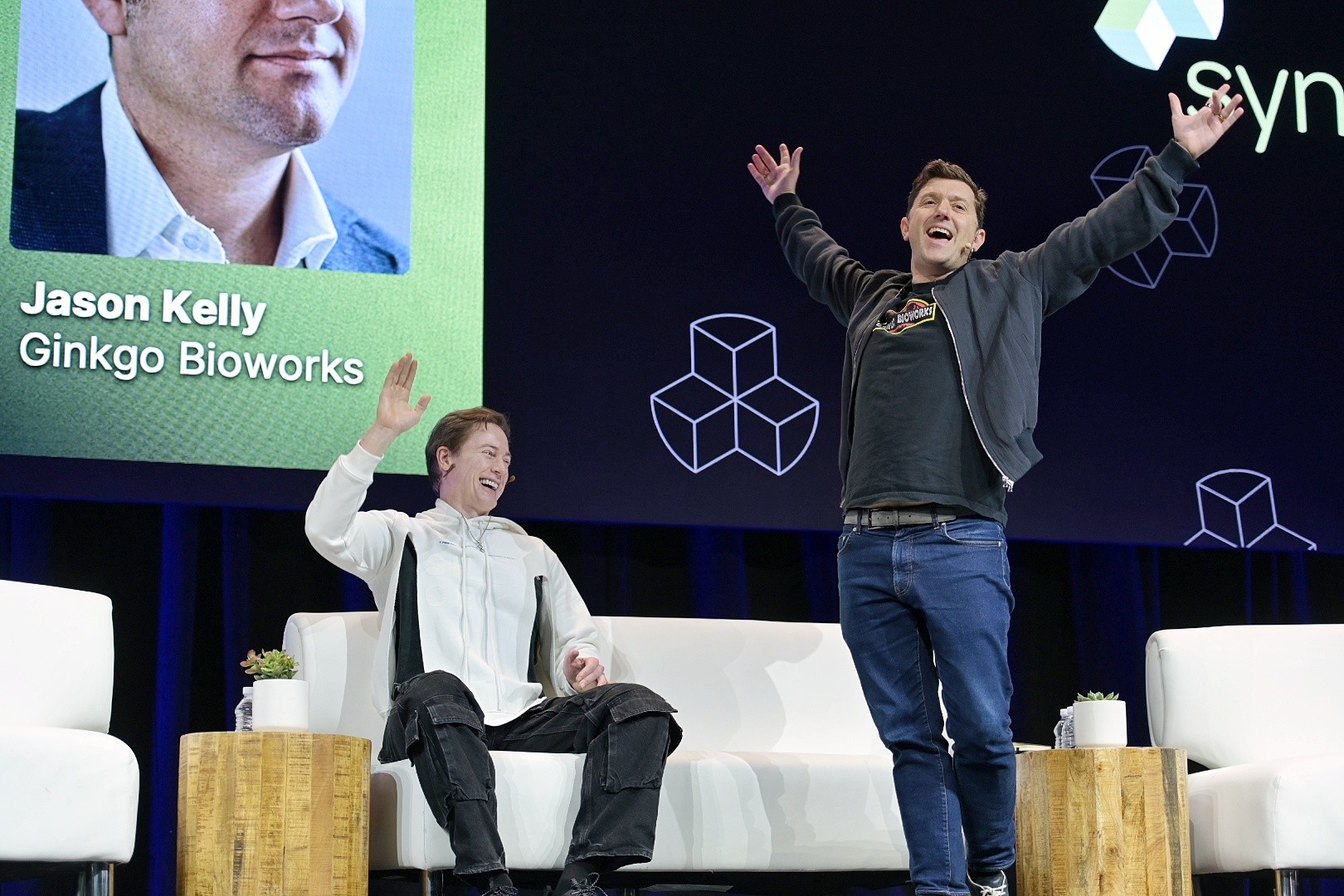
Jason Kelly on stage at Synbiobeta with Bryan Johnson. Learn more here: https://www.syntheticbiologysummit.com/