How Cultivated Meat Carved Out Its Plate in History
Discover how cultivated meat evolved from a futuristic concept to an emerging reality poised to transform our dinner tables
[Ideogram.ai]
With Thanksgiving right around the corner in the US, Americans are preparing to consume 46 million turkeys across the country (based on USDA estimates). That’s a lot of turkeys. But what if we could reimagine this holiday staple? Picture a future where the Thanksgiving turkey on your table didn’t grow up on a farm but instead grew inside a bioreactor. Science fiction or an anticipated reality?
In 2013, the world’s first cultivated burger took center stage at a news conference in London. The Dutch scientist Mark Post of Maastricht University had grown this burger from stem cells from cows and provided the serum and other factors needed to drive these cells to form strands of muscle tissues. It cost $330,000 USD to create. The high price tag did not stop the cultivated meat industry and instead spurred even more innovation in this area.
So how did we arrive at the $330,000 burger, what has happened since, and where is the cultivated meat industry going? We spoke with Sonalie Figueiras, Founding Editor of Green Queen Media and the Food & Ag Track Chair at SynBioBeta 2025, to find out.
The Early Beginnings
While the $330,000 burger was at the beginning of the cultivated meat boom, it was not the first ponderings about growing meat in the lab. For that, we have to go back several decades.
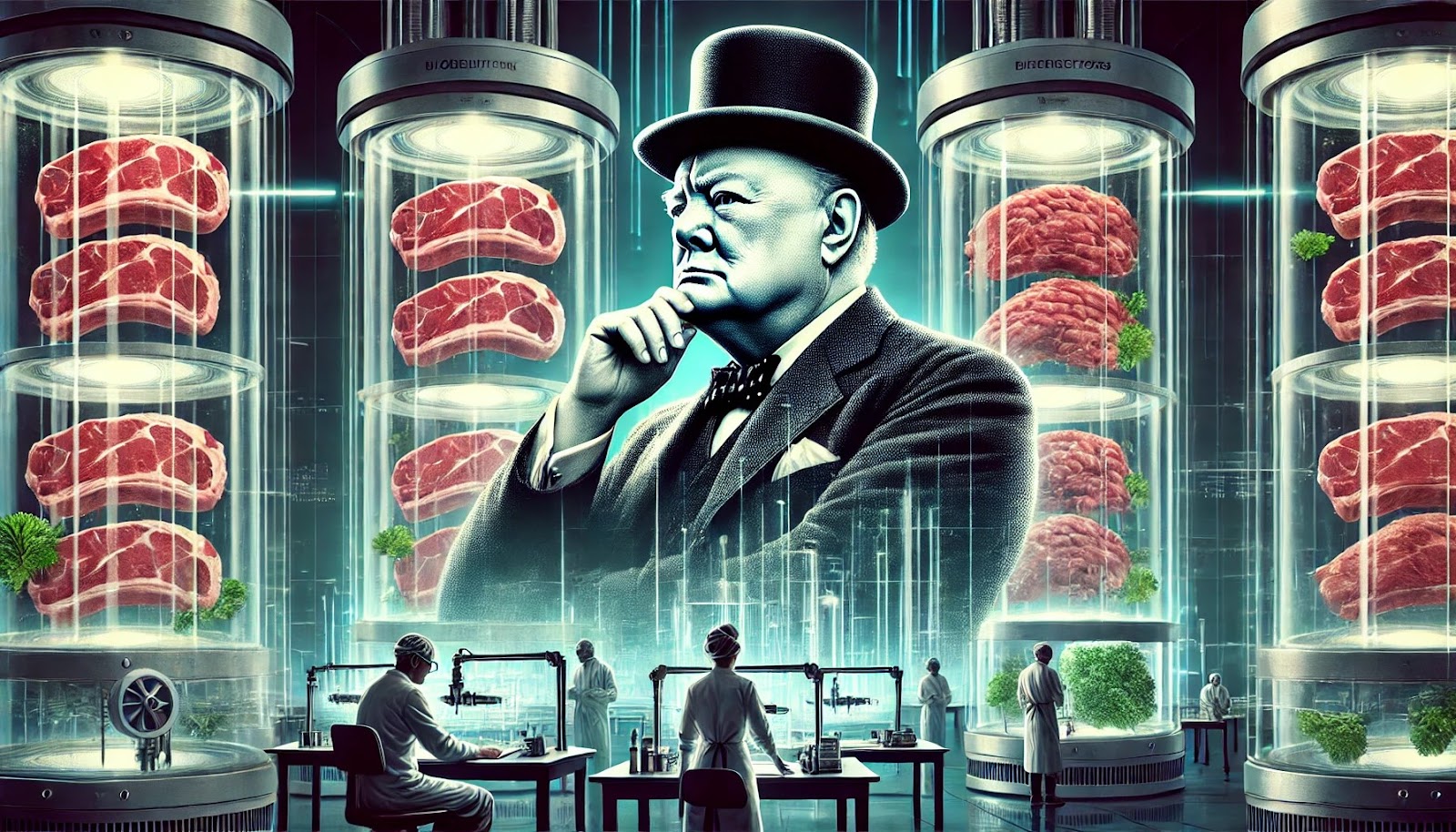
1931: Winston Churchill published an article about what the world would be like 50 years from then. The futuristic article included a mention of lab-grown meat: "With a greater knowledge of what are called hormones, i.e., the chemical messengers in our blood, it will be possible to control growth. We shall escape the absurdity of growing a whole chicken in order to eat the breast or wing by growing these parts separately under a suitable medium."
1990s: Dutch researcher Willem Van Eelen raised $750,000 USD to work on developing lab-grown meat. He filed the first of several patents in 1994 on the use of cell culture to produce meat. Van Eelen had originally thought about the idea decades before when he saw researchers use stem cells to grow skin cells to treat burn victims.
2002: Bioengineers at Touro College, through work funded by NASA, grew fish tissue in the lab. They submerged a piece of goldfish flesh in fetal cow serum and found that the flesh increased in size by 16 percent. The idea was that growing food this way could be a source of protein for astronauts.
The Cultivated Meat Boom
Despite these early inklings into cultured meat, it wasn’t until the 2010s that things started to take off. “Ten years ago, we got our first burger in a lab at a university,” said Figueiras. “And now today, we have over 100 companies all around the world doing different things.” She adds, “About five or six years ago, there was just an explosion. That's around the same point in time when there suddenly was a global awareness around the connection between food systems and greenhouse gas emissions.”
2013: The Dutch scientist Mark Post of Maastricht University announced the first lab-grown burger, which cost $330,000 to make. Post was one of the researchers who had worked with Van Eelen in the past, but funding from the Dutch government had run out. He then secured funding from Sergey Brin, Google’s co-founder, to continue the work.
2014: Memphis Meats (now Upside Foods) becomes the first cultivated meat company to incorporate in the world. The company uses genetic engineering to immortalize fibroblast cells that can differentiate to create cultivated meat. This contrasts with earlier methods which produce cultivated meat from cells sourced from live animals.
2016: Mark Post and Peter Verstrate, a food technologist who worked on the $330,000 burger, co-founded Mosa Meat. The company has since focused on reducing the cost of cultured meat by reducing the price of growth media and scaling production.
2016: Wildtype was founded to create cultivated seafood. The company focused on growing fish like coho salmon, which are already expensive and threatened or endangered.
2018: BlueNalu launches in cellular aquaculture.
2018: Aleph Farms, which was founded in 2017, reveals the first cultivated thin-cut steak. Since then, they’ve grown the first cell-based meat on the International Space Station, and 3-D printed a cultivated ribeye steak.
2022:The cultivated meat industry has grown to 150 companies across six continents. Total investment in these companies amounted to $2.6 billion to create cultivated meat products.
Addressing Scalability and Affordability
Once called “lab-grown meat,” the term doesn’t quite fit the industry today. “A lot of companies have actually left the lab, and they are in production facilities,” said Figueiras. “We are very much at the very beginning of this technology, and like all new technologies, it's going to take time to figure out scale and lower the cost.”

One of the reasons behind the high price point is the need for serum to grow the cells. Andrew Rosenblum wrote for MIT Tech Review in 2016, “Growing a turkey-size amount of white meat this way would require about 11,340 flasks and about $34,000 worth of growth serum.” Efforts to reduce the cost of cultivated meat include lowering the cost of the products needed to grow meat and addressing the production process. Figueiras says, “Most [companies] do not use animal serum anymore.”
2015: BioBetter was founded to create growth factors needed to cultivate meat in tobacco plant-based bioreactors.
2019: Multus Biotechnology was founded to create growth media alternatives to fetal bovine serum. They use an in-house ingredient library to optimize serum replacements for cost reduction. Now, in 2024, their new manufacturing facility can support the cultivation of 500 tons of meat a year.
2021: Believer Meats (formerly known as Future Meat Technologies) announced it could create a pound of cultivated chicken for $7.70.
2021: Upside Foods develops animal-free growth medium as an alternative to fetal bovine serum. The company used its animal-free medium to produce chicken nuggets and hot dogs.
2022: Mosa Meat scales up cultivated beef production. Their total facility size sits over 77,000 square feet, which is the largest cultivated meat facility at the time.
2023: Pluri Inc. reveals a new technology that boosts cell production compared to stir-tank bioreactors. Their platform, called PluriMatrix, uses 3D tissue-like scaffolds that they claim increase productivity by over 700%.
Gaining Regulatory Approval
While scaling production and reducing the cost of the product is one arm of the path toward cultivated meat hitting the shelves, another hurdle is gaining regulatory approval. With approvals from different governmental agencies beginning to appear, cultivated meat companies have even more incentive to scale and optimize production processes.
2019: The US FDA and USDA’s Food Safety and Inspection Service (FSIS) enter an agreement to jointly regulate and oversee the production of cellular agriculture products. In this agreement, the FDA will oversee cell collection, growth, and differentiation, while FSIS will oversee production and labeling.
2020: Singapore became the first country to green-light cultivated meat when they approved Eat Just’s cultivated chicken. However, it’s complicated: it’s only found in a few restaurants, and since it’s become available on the shelf – in one store in Singapore—it’s only 3% animal cells.
2022: The US FDA announces cultivated chicken from Upside Foods is safe to eat.
2023: The USDA approves cultivated chicken from GOOD Meat (a brand of East Just) and Upside Foods. However, this is only available in a few restaurants in the US.
2024: Meatable, a Dutch company working on lab-grown pork, receives approval from the European Food Safety Authority for the public tasting of cultivated meat in the EU. It is currently filing regulatory dossiers in six countries.
2024: Israel approves cultivated beef from Aleph Farms.
The Future of Cultivated Meat
With regulatory approvals trickling in in different countries, when should we expect to see cultivated meat on the shelves?
The first of these products will most likely be the high-end products. “For a premium product like foie gras, where conventional foie gras from a duck or a goose is extremely expensive, cultivated foie gras can make a lot of sense financially,” said Figueiras. “I think we're going to see products like that much earlier.”
As for that Thanksgiving turkey, it could be some time before we see cultivated turkey make it onto the dinner table. “I would say we're looking at 20 to 30 years for [cultivated meat] to be mainstream,” said Figueiras.