Ai Digital Biology
Consumer Products
Biopharma Solutions Tools Tech
How ImpriMed Turned Nine Years in Veterinary Oncology Into a Human Blood Cancer Business
Blood cancer samples are easy to draw and nearly impossible to study. One company fixed that in its first year, then spent eight more earning the right to sell it.

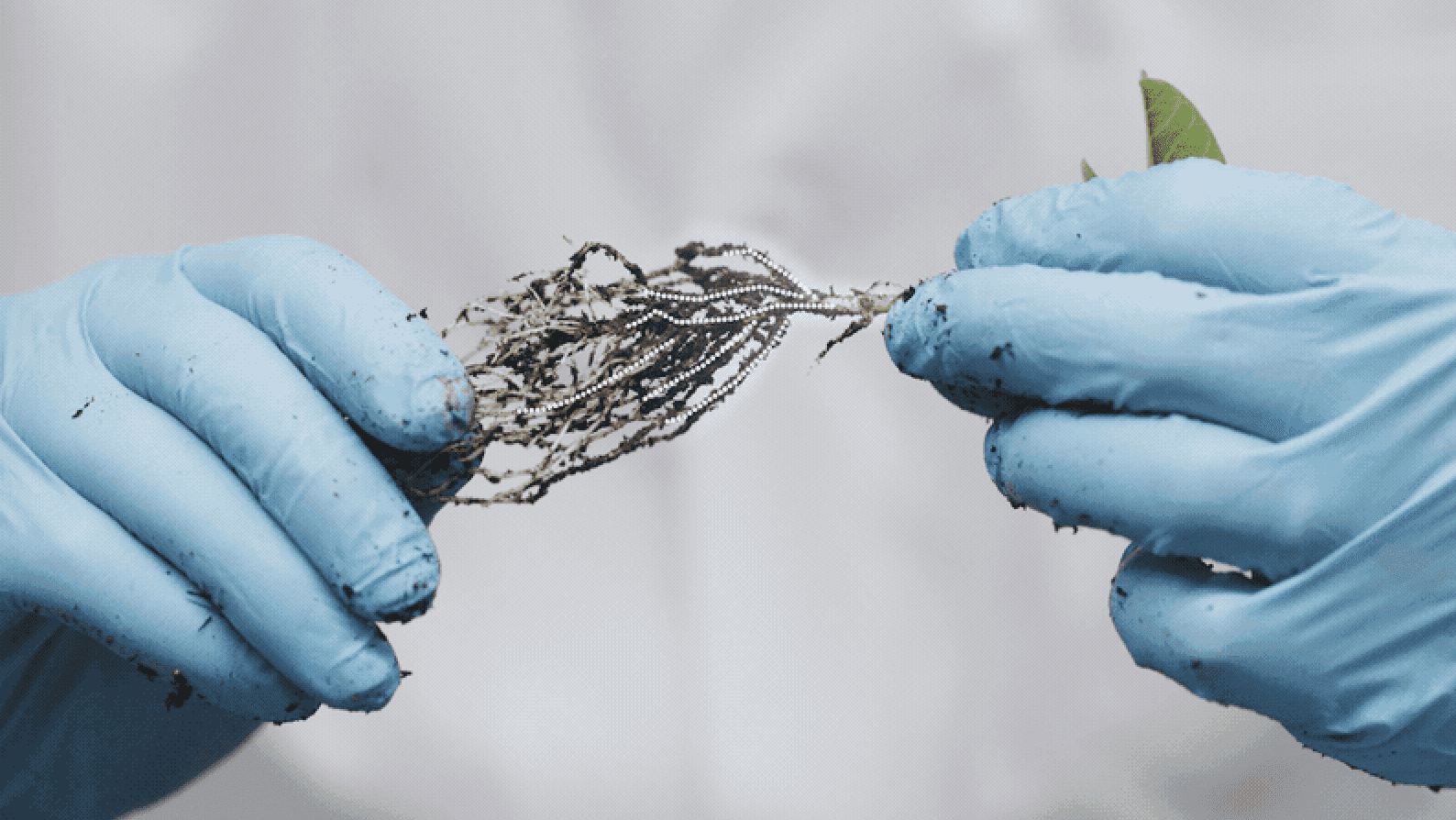
Acute myeloid leukemia (AML), a form of blood cancer, will be diagnosed in more than 22,000 Americans this year. Studying it has been one of the hardest problems in oncology, with access to usable fresh samples close to impossible.
Drawing a sample is as easy as a blood draw. Then the clock starts.
Primary leukemic blasts, the cells AML is derived from, begin dying almost immediately once they leave the body. They evolved to live inside the bone marrow niche and expect that environment to be present. Strip it away and viability declines steadily across the first five to seven days, even under optimized handling. How fast it falls varies from patient to patient, so the decay is not even a consistent error you can correct for.
Much of preclinical hematology therefore runs on immortalized cell lines instead. K562 was established in 1970, HL-60 in 1977. Half a century of work has tapped most of what they have to offer, and they carry a known defect: cell lines acquire mutations over time and drift away from the leukemias found in patients.
The field has therefore been stuck between two bad options: a cell model that no longer behaves like the disease, or a primary sample and a race against time and variability to get anything reliable out of it.
ImpriMed solved the second problem within its first year. It would take another eight before the company had enough confidence, and enough supply, to open the platform to anyone else.
The first year
Sungwon Lim founded ImpriMed in May 2017 with Jamin Koo, intending to work on human blood cancers.
The chemistry took five months. Lab work produced a culture medium formulated for cells from lymphoma and leukemia patients, paired with a transport medium for shipping. ImpriMed now keeps 80 to 90 percent of blood cancer cells viable for four to seven days, long enough to ship a sample from a hospital anywhere and still run a full drug panel on living cells. Because samples can travel, all the testing lands in one laboratory running one protocol, which removes the variation that comes from every site handling cells its own way.
Then nothing arrived. Being able to receive live cells is not the same as getting anyone to send them. For ten months not a single clinical sample reached the lab. Institutional review consumed the calendar, and hospitals had little reason to prioritize an unproven startup.
Harder still were the medical records. A drug sensitivity result on its own is a measurement in a dish. It only becomes a prediction if you can check it against what happened to the patient afterward, and those charts were slower to obtain than the samples. The bank account fell to three thousand dollars.
Then I realized that, oh, okay, this is why I don't see a company like ours.
Sungwon Lim, CEO and Co-Founder, ImpriMed
The answer came from the desk next to his. ImpriMed's earliest money came from Pear VC, and the company spent its first years in Pear’s shared office space where a dozen startups sit within earshot of each other, all of them a few months from either a term sheet or the end. One of the neighbors was trying to build a single operating system for the twenty thousand-plus American animal hospitals running incompatible software. Its CEO explained the market to Lim: dogs get cancer, more of them are diagnosed every year than humans, and only a few hundred board-certified veterinary oncologists in the entire country are available to treat them.
Lim, who had spent more than a decade in cancer drug development, had never considered it. That conversation is the reason ImpriMed still exists. The neighbor's company was gone within two years.
ImpriMed pivoted in 2018, into a field where the samples and the outcomes were both within reach. It also ran faster. Canine cell cycles turn over seven to eight times more quickly than human ones, and tumor progression and drug response scale with them, so every loop of predict, treat, observe and retrain compressed by roughly the same factor. The company would learn more about drug response in five years than it could have learned in forty.
Lim kept his original scientific choice through the pivot, having selected blood cancers because suspension cells do not attach to tissue and are easier to keep alive and model. Blood cancer turned out to be the most common cancer in dogs and cats.
It was very lucky. It was a luck.
Sungwon Lim, CEO and Co-Founder, ImpriMed
The proof
Dogs gave ImpriMed the records it could not get from hospitals, and the company took them seriously. It followed its patients at three months, six months, one year, eighteen months and two years, building a file of what the model predicted alongside what happened.
Because oncologists remained free to prescribe as they judged best, the company could score how closely each dog's treatment matched its models' recommendations, then compare outcomes. Across 31 veterinarians at 29 clinics in 14 states, dogs in the high-matching group achieved complete response 53 percent of the time against a historical control rate of 27 percent.
Fifteen thousand patients later, that record is ImpriMed's asset. Any competent laboratory can produce a drug sensitivity number. Producing evidence that the number tracks what happens to a patient is a different undertaking.
Back to humans
The animal business was never the destination. Lim had gone into veterinary oncology because it was the only door open, and he says the company never lost sight of the human side. By 2021, the year the veterinary service commercialized, human R&D was already running.
The same two shortages were waiting, cells and records. Solving them took two moves. For validation at scale, ImpriMed went through the Mayo Clinic Platform accelerator and tested its models against a database of roughly 3.5 million patients. For living cells and the outcomes attached to them, it went to Korea, where partnerships with Catholic University's Seoul St. Mary's Hospital and Asan Medical Center supply what dogs supply on the veterinary side: samples from patients whose treatment and survival the company can follow. Nearly every human paper ImpriMed has published, on AML, on lymphoma, on myeloma, carries Korean hematologists as co-authors. Korean regulators have moved faster than American ones, designating the myeloma technology an innovative medical device.
The models that came out of it do something more specific than rank drugs. For newly diagnosed myeloma they estimate a patient's probability of early progression under three named first-line regimens. For AML, drug sensitivity across 21 compounds stratifies risk under venetoclax plus a hypomethylating agent or idarubicin plus cytarabine. The output is not a list of promising molecules. It is a forecast about a specific person on a specific protocol.
Which is what a drug developer wants
That capability turns out to be worth more to pharmaceutical companies than to clinics. Eight years after the transport medium worked, ImpriMed opened the platform to outside sponsors as a contract research service. It has been steadily gaining sponsors ever since.
The reason is stratification. A sponsor developing a hematologic drug has to decide, before an IND, which patients the drug is for. Get it wrong and the Phase I enrolls a population the compound was never going to help, and the readout is noise. This is the last point in development where that decision can still be changed cheaply, and it is currently made from cell line data and mouse models.
ImpriMed offers a different basis for it. A sponsor's compound comes back as a raw measurement, how much of a given patient's cancer it killed. Alongside it, from the same sample in the same run, come predicted response scores for the conventional drugs, including the standard combination that patient would actually receive. The novel compound is measured. The standard of care is predicted, by models validated against real outcomes.
That pairing is the product. A number showing your drug killed blasts means little alone. A number showing your drug killed blasts in patients the standard of care was predicted to fail is an indication and a set of inclusion criteria, from one assay. It also means the veterinary validation is being used for what it was validated to do rather than stretched to cover a new molecule.
The rest of the ladder follows from there: profiling responders against non-responders, testing the compound alongside the standard backbone, and eventually building a companion diagnostic around it. All of it is confined to blood cancers. A solid tumor program is being established through external partnerships.
The reason they signed is not that ImpriMed can keep cells alive. Several laboratories can. First Ascent Biomedical opened a CLIA and CAP certified facility in Miami in February 2026, and Travera, Exvivo Labs and KYAN Technologies work adjacent ground. They signed because of what a sponsor is buying at that stage, which is not data. It is permission to commit.
A preclinical program has to pick a patient population and then spend eight figures finding out whether it picked correctly. Every input available for that decision is a proxy: a cell line that has drifted for fifty years, a mouse without an immune system, a mutation that correlates with response in a retrospective cohort. ImpriMed offers the only input that is not a proxy, a living cell from a real patient, benchmarked against a model that has been checked against what happened to fifteen thousand of them. That does not guarantee the answer is right. It means the decision rests on something that has been tested against reality rather than something that resembles it.
Which is why the request most partners make is for fresh samples rather than banked. They are not buying a result. They are buying the confidence to enroll.
The American Society of Clinical Oncology told oncologists twice, in 2004 and 2011, not to rely on this class of test. In July, the National Cancer Institute convened the companies still working on it, Lim among them, to work out how it reaches patients at scale. What changed in twenty-two years was not biology. It was that someone finally built the record showing the numbers meant something, and to do it he had to spend nine years treating dogs.
ImpriMed's ex vivo CRO services cover drug candidates targeting human acute myeloid leukemia, non-Hodgkin lymphoma, and blood cancers in companion animals. Human precision medicine predictions in the United States are designated for research and investigational use only.