Bioeconomy Policy
Biomanufacturing Scale Up
Capital Markets
Lab Monkeys for US$26,000 Show China’s Biotech Quest to Rival US
China's surge in demand for lab monkeys highlights its growing ambition in the biotech sector as it strives to become a leader in innovative drug development.
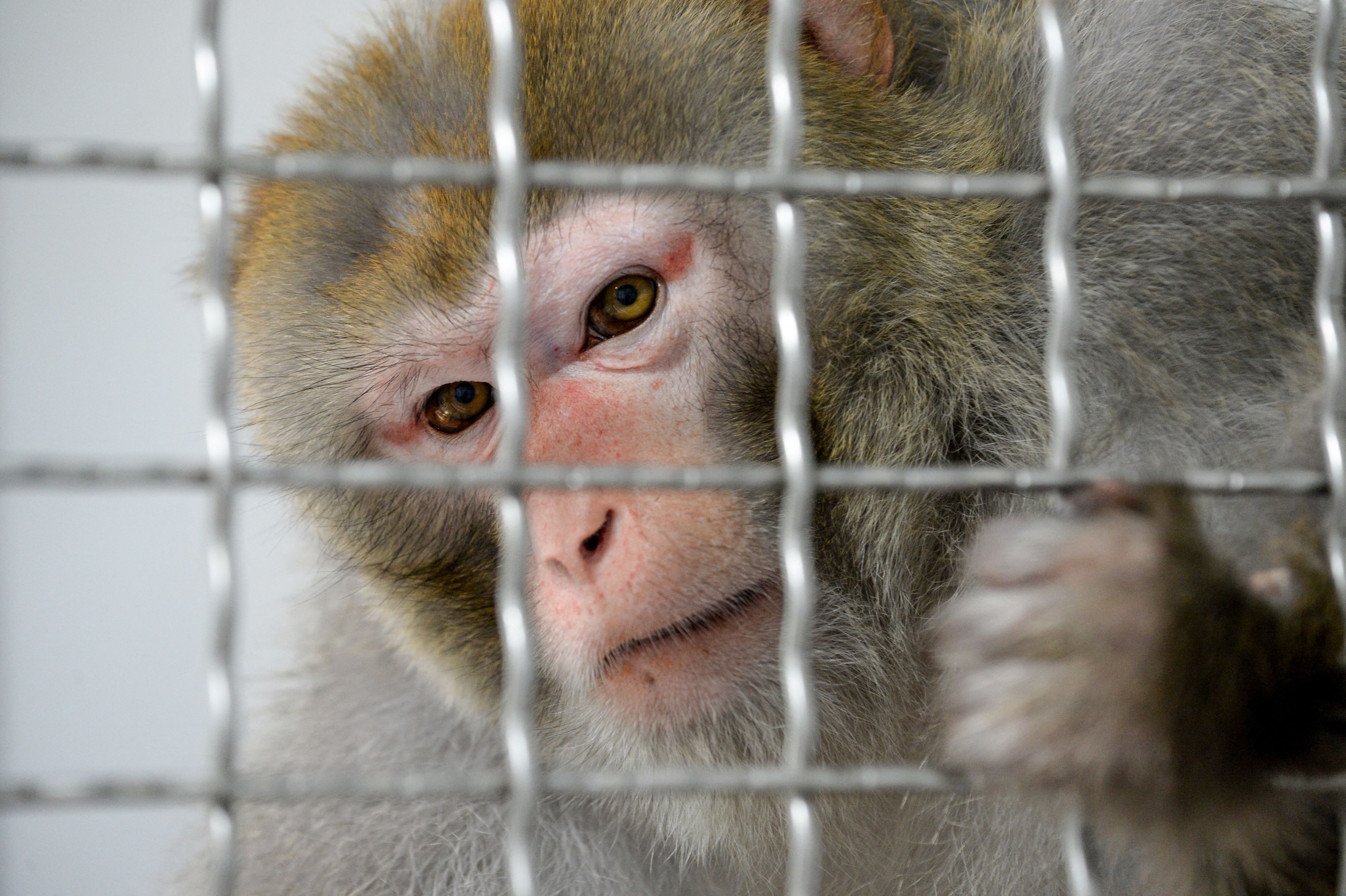
Prices for lab monkeys in China have skyrocketed, complicating the process of drug development and increasing reliance on imports from neighboring countries. In June, a state lab acquired 40 cynomolgus monkeys at 178,000 yuan (US$26,294) each, which is nearly double the price from a year ago. According to several biotech executives, there have been similar price increases across the industry for these small-sized primates, which are essential for drug safety trials.
The current supply squeeze could result in delays for China's rapid drug development, as monkey experiments are a prerequisite for certain drugs to receive approvals. Industry executives and analysts indicate that supply from regulated monkey farms remains largely stable. The price surge is primarily driven by demand; an explosion of new biologics and next-generation therapies has created a significant increase in the need for primate studies that far exceeds existing capacity.
This situation echoes the monkey shortages witnessed during the Covid pandemic, when a surge in vaccine programs led to intense demand and inflated prices. However, the current supply mismatch is indicative of China’s emergence as a key player in novel drug development. China now accounts for roughly a third of the world’s innovative drug pipeline and is the leading site for clinical trials, having forged major agreements with US and European companies eager to source new treatments.
“It’s like negotiating with Nvidia to secure its chips, or arranging for capacity with a data centre provider, if you are a large language model company in need of computing power,” remarked Jielun Zhu, co-founder and chief financial officer at cancer therapy developer Excalipoint Therapeutics. “Everybody has their own way.”
The demand for monkeys is not confined to China. In the US, approximately 60,000 monkeys are utilized annually in research, with some selling for over US$50,000 as recently as 2024. France's National Centre for Scientific Research is also expanding breeding capacity due to rising primate costs, which have reached 30,000 euros (US$34,595) each.
Nevertheless, the demand and price surge in China reflects the rapid pace of the country's drive to develop innovative drugs that could rival global pharmaceutical firms. With sourcing monkeys becoming increasingly difficult, the planning phase for studies can extend by four months, and in some cases, up to 10 months, said Harri Jarvelainen, a China-based independent consultant advising Western clients on pre-clinical work. He added that since Chinese regulators require monkeys used in toxicology testing to be at least three years old, “once a bottleneck develops, you can’t fix it just like that.”
This supply crunch is testing companies' abilities to quickly validate drug candidates and initiate clinical trials. Monkeys are crucial, prompting large contract research organizations like WuXi AppTec, Pharmaron Beijing, and Joinn Laboratories to establish their own breeding farms to secure access. This is particularly vital for testing biologics, which are complex medicines that hold promise for challenging diseases like cancer and inflammation.
To obtain regulatory approval for biologics trials, companies often need to provide monkey data to demonstrate potential human safety, with a single program requiring anywhere from a dozen to 100 monkeys. Monkey studies are critical for newer technologies such as antibody-drug conjugates, bispecifics, and in vivo CAR-T, which are areas of significant research and development in China, according to Chen Chen, head of China healthcare research at UBS Securities.
The cost of a single monkey may exceed 200,000 yuan next year, compared to just over 100,000 yuan a year or two ago. However, the ultimate price for each company depends on factors like the quantity needed, urgency, and vendor. A report from Zheshang Securities in February projected an annual shortage of 15,000 to 20,000 monkeys between 2026 and 2028. Imports from regions like Cambodia, which resumed in 2026 after a pandemic-related hiatus, are anticipated to eventually help alleviate the shortage. In the meantime, competition for the limited supply is likely to persist as investments continue to flow into new projects. Private Chinese biotechs raised over US$3.49 billion in the first half of 2026, surpassing the total for all of 2025, according to business intelligence platform PharmaDJ.