Biopharma Solutions Tools Tech
Ai Digital Biology
Bio Design
Medra Secures $52 Million Series A to Revolutionize Drug Discovery with Physical AI Scientists
Medra is pioneering a new era in drug development by integrating AI with robotics to create a seamless experimentation process.
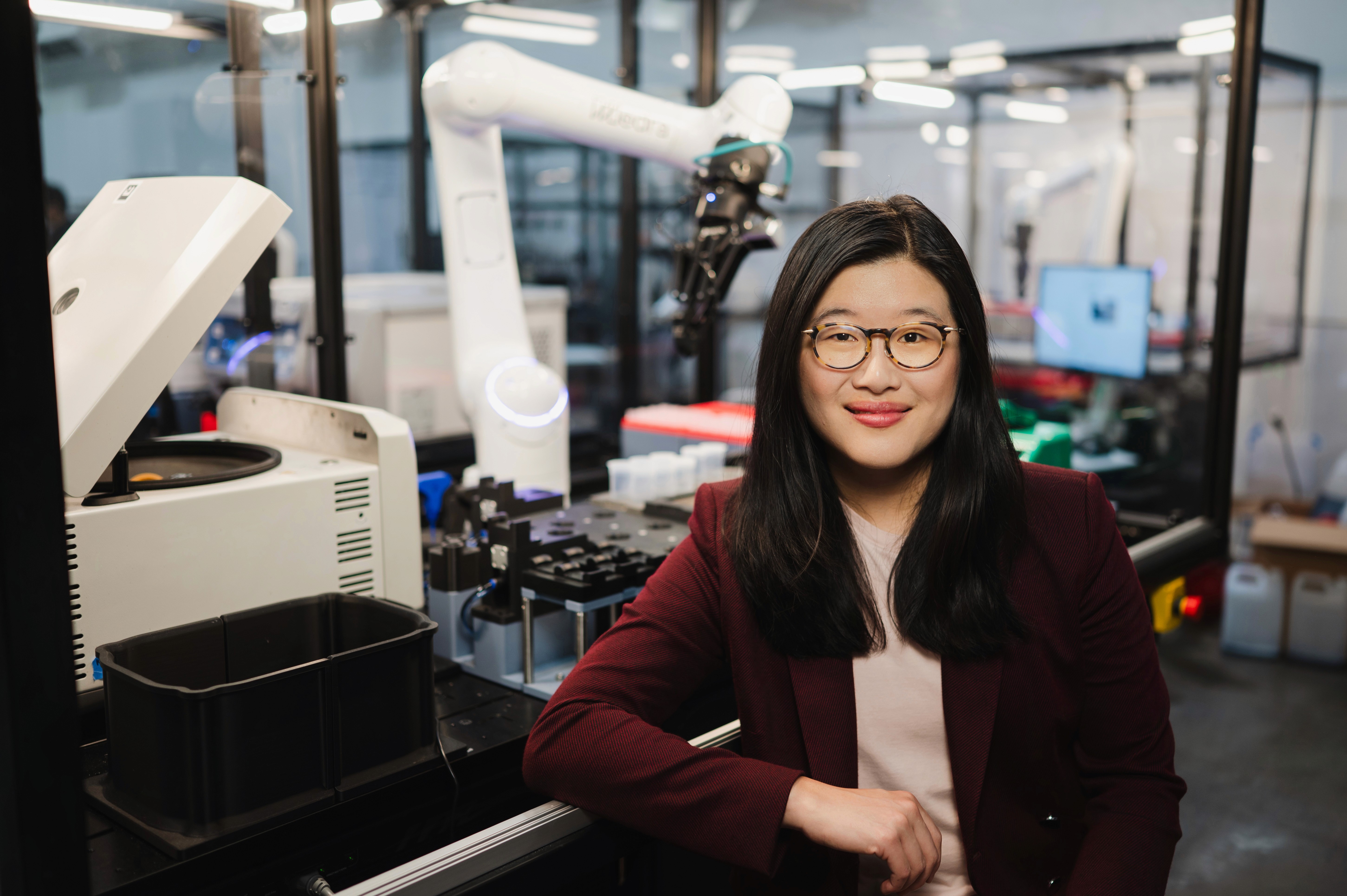
Image via Medra
Medra, the innovative company that is developing the first platform for Physical AI Scientists, has announced a successful $52 million Series A funding round led by Human Capital. This round also saw participation from existing investors such as Lux Capital, Neo, and NFDG, along with new backers including Catalio Capital Management, Menlo Ventures, 776, Fusion Fund, and others.
Medra’s Physical AI operates autonomously to conduct experiments from start to finish, seamlessly interfacing with standard laboratory tools. This capability allows scientists to modify workflows using natural-language instructions. Complementing this system is Medra’s Scientific AI, which analyzes results and collaborates on protocol enhancements to optimize experimental outcomes, creating a self-learning engine.
“Pharma runs millions of experiments, but most of that data can’t be reused or fed back into AI. We’re closing that loop by tying predictions to outcomes in a continuous, self-improving cycle,” said Michelle Lee, Ph.D., CEO & Founder, Medra. “To accelerate drug development, we need to link predictions directly to automated execution and feed the results back into the model. This continuous loop enables drug discovery companies to run far more experiments, iterate faster, and advance therapies with a higher probability of success.”
Traditional alternatives in AI lab automation often fall short, either providing standard industrial automation without significant machine learning or offering AI-driven software devoid of robotic execution. The lengthy process of bringing a new medicine to market—typically taking 10-15 years and costing over $2 billion—has been slow and fragmented due to manual and disjointed discovery and preclinical work.
Pharmaceutical companies have attempted to address this with partial automation that remains fragile, inflexible, and reliant on scientist intervention. Meanwhile, separate machine learning programs still necessitate laborious manual experiments to gather data. These disparate efforts lack a closed feedback loop, leaving experimentation and data generation disconnected from model improvement. Medra addresses this challenge by integrating robotics, AI, and data generation into a unified, ongoing system.
“Medra is creating an entirely new category in biopharma R&D, one where we believe science can continuously learn and scale to create groundbreaking therapeutics with a higher chance of clinical success,” said Armaan Ali, Co-founder, CEO & Managing Partner, Human Capital.
Patrick Hsu, Assistant Professor at UC Berkeley and co-founder of the Arc Institute, noted, “AI models are generating predictions far faster than we can validate them experimentally. Integrating these tools with traditional lab automation is often too rigid to scale effectively. Medra’s Physical AI Scientist bridges this gap using autonomous, general-purpose robotics. The system learns from every experiment, creating the continuous feedback loop needed to scale data generation and drive breakthroughs in frontier science.”