Engineered Human Therapies
News Digest #227 - Meet Azitra and the skin microbiome. Newco A-Alpha Bio, Lygos’ $15.5M and Inscripta's new patents (sponsored by Azitra)


Hi all,This week's digest launches a three-part content series on the skin microbiome, brought to you by Azitra. Although the gut microbiome, probiotics, and fecal microbial transplants have garnered much attention in the media, many people are less aware of how important a healthy microbiome is for your skin. So this week we look at the R&D efforts of scientists at Azitra and elsewhere to bioengineer microbes to treat eczema and other skin conditions by supporting and maintaining a healthy, balanced skin microbial community. We hope you enjoy learning about this topic as much as we do.

'Human microbial ecosystem, artistic representation' by Rebecca D Harris. Credit: Rebecca D Harris. CC BY
Don’t miss the “Engineering the microbiome” session at SynBioBeta 2018, October 1–3. More speakers will be announced soon.

In gene editing news, Inscripta announced its first patent covering systems using MAD7, the company’s first free CRISPR enzyme, and they have shown that MAD7 is an effective tool in editing microbial and mammalian cells.A-Alpha Bio is a new startup that has spun out of the University of Washington's Institute for Protein Design and Center for Synthetic Biology with scientific advisors David Baker and Eric Klavins. The founder and CEO David Younger will be speaking at SynBioBeta in October. They recently received a grant to develop a cool technology for genetically engineering yeast to help scientists test hundreds of drug candidates against thousands of potential targets.In funding news, AgBiome raised $65 million in Series C financing to harness the plant microbiome to bring novel crop protection products to the market. Lygos closed $15.5 million in Series B funding to advance their platform based on a combination of computational modeling, microbe engineering, and deep learning to develop new bio-chemicals.Earlier this month, we examined the investment increase in synthetic biology companies, and we found the overall picture to be overwhelmingly positive. In a special webinar with SynbiCITE, Paul Freemont (pictured below) explained to us recently that this rapid increase in investments can be put down to two things: increased government support and translation of research.

Check out this SVB report that shows how the biopharma industry has generated 75 unicorns since 2013 and sparked a new wave of healthcare venture investing. Makers of synthetic biology building blocks — including computational design, CRISPR editing, DNA/RNA synthesis and organism engineering tools — are revolutionizing the subsector, and investments in these companies continue to climb.Finally, a big congratulations to Pivot Bio for being recognized as a leader in sustainability by the Business Intelligence Group. They are engineering microbes to improve crop productivity while reducing fertilizer pollution.Have a great week.Regards,John
$1.65M for synthetic biology research and training at Concordia
Locus Biosciences acquires EpiBiome's platform to enhance CRISPR phage therapies
NSF announces new awards in semiconductor synthetic biology
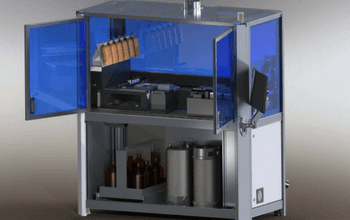
This company aims to deliver DNA on demand with its biological fax machine

A recap of the FDA’s public meeting on foods produced using animal cell culture technology