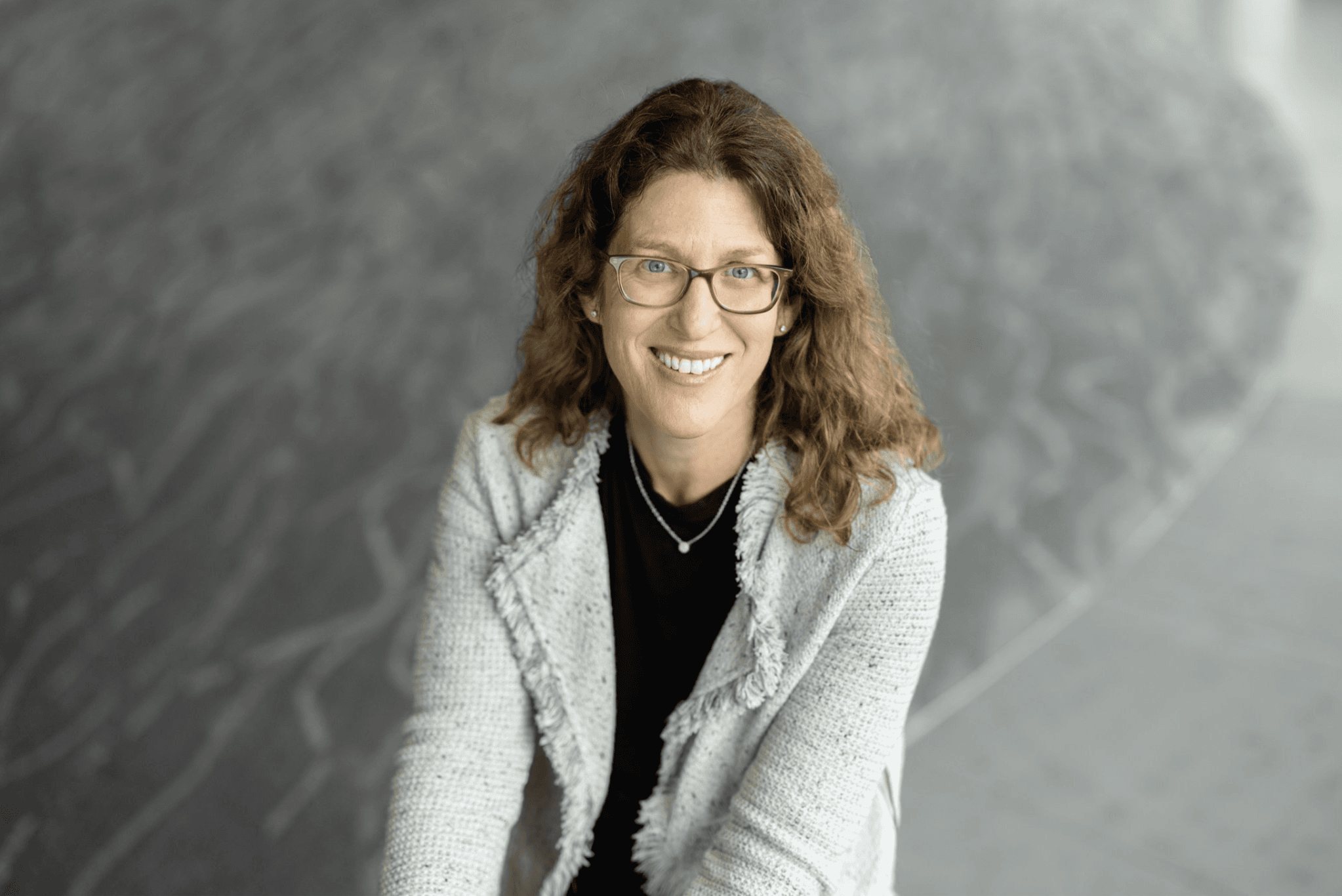
Maya Skubatch, a partner at Wilson Sonsini Goodrich & Rosati and one of the most respected patent minds in biotech, passed away last week after a five-year battle with a rare form of cancer called Blue Nevus Melanoma. She was 52.
I knew Maya as a friend as well as a colleague. She spoke at SynBioBeta many times over the years, always generous with her time, always more interested in talking about the science and the founders behind it than about herself. That was Maya: whip-smart, endlessly curious, and somehow always making the person in front of her feel like the most important thing going on that day.
To the founders and executives she represented, Maya was the person you called before you called anyone else - the lawyer who could tell you, often before you fully understood it yourself, whether the thing you'd just discovered in the lab was actually new. "Innovation can be lonely work, but with Maya, who knew everything about anything in my space, I was emboldened by her excitement: 'Jake, this is really new, no one is doing anything like this, and yes, you should push forward,'" said Jacob Glanville, founder and CEO of Centivax, a company making a universal flu vaccine and a client of Maya's.
To her colleagues, she was the architect of a patent practice that grew, under her hand, into one of the most respected in American law. And to her family, she was, above all, a devoted wife and mother who somehow made room for all of it.
Maya joined Wilson Sonsini 23 years ago as the first associate ever hired into what would become its patents and innovations group, working alongside Vern Norviel, who founded the department and led it as senior partner until his retirement last year. Under their combined stewardship, the practice grew into one of the largest life sciences IP groups in the world, today numbering 248 people across patent attorneys, agents, and business professionals.
"With Maya's help, it became the best patent group in the history of American law," said Michael Hostetler, senior partner of Wilson Sonsini's patents and innovations group. "Now, with over 14 partners in the group, Maya mentored 12 of them."
Norviel, who hired Maya twice - first at Affymetrix nearly 30 years ago, then again when he started Wilson's patent department - remembers her most for something that had nothing to do with patents at all:
"Maya is of course known for her work. But none of that is what I remember most vividly. When my late wife was sick, also with a rare cancer, Maya would take time every week and sit with her - often just holding her hand. That is what I can never forget."
The scope of what Maya built, and what she helped bring to patients, is hard to overstate. She authored an amicus brief to the U.S. Supreme Court in Ariosa Diagnostics' patent-eligibility case, arguing that strong IP protection for early, pre-symptomatic disease detection is what makes commercial development of these diagnostics possible in the first place.
Maya worked on a diverse array of biotechnologies, becoming an expert in whatever she touched, and especially diagnostics and synthetic biology.
That record earned her a distinction few in her field ever reach: a seat on Wilson Sonsini's Board of Directors, where she served for three years. In the firm's history, only three patent partners have ever held a board seat.
For Julia Minitti, a partner in Wilson Sonsini's patent and innovation strategies practice who worked alongside Maya for twelve years, that professional record was only part of the picture. "Maya was a mentor and champion for my career development," Minitti told me - and in a tribute she posted on LinkedIn after Maya's death, she described what that mentorship actually felt like day to day:
"For twelve years, Maya Skubatch was the person I turned to for everything - the minutiae of day-to-day patent practice, scientific expertise, business development, office politics, and most importantly, family and life. In the early years, she taught me to step back and see the big picture, to work as hard as our start-up clients were working to develop life-changing medicines, to produce nothing less than the best. She modeled high expectations, but always with humanity - she knew exactly how demanding she was, and if you stuck with it, she was there for you, as a colleague and as a friend."
But it was Maya's final chapter that revealed the full measure of who she was. During her five-year fight with cancer, she turned her illness into advocacy - becoming a voice for reforming the clinical trial process and expanding patients' right to try experimental treatments. In 2024, she founded the Blue Nevus Melanoma (BNM) Foundation, refusing to accept how limited the research and treatment options were for melanoma patients. The foundation pursues two goals: funding research that could lead to new treatments for blue nevus melanoma - and potentially other cancers - and building a patient registry and a supporting community for others facing the same long road to recovery. In parallel, she formed a company, BNM Oncology to develop an actual drug for the driving mutation for BNM and Uveal Melanoma. She had been working with a group of researchers in UCSF, raised an initial seed and acted as the CEO. This was the long game assuming the treatment and personalized vaccines from 2026 would have given her the chance to wait 2-3 years. She also envisioned a documentary series, tentatively titled Rare, meant to shine a light on what patients battling little-understood diseases go through just to access care. She was still pushing that work forward in her final months, recording her thoughts even while pursuing cell therapy treatment abroad.
"We spoke often, these last year and a half, about her vision for better access to treatments for rare diseases," Glanville said. "She was right that we need reform, and I hope others carry that torch too."
That sentiment - of a torch being carried rather than extinguished - echoes through how people describe her. The partners she trained now carry her approach to patent strategy into their own practices. Patients are living with treatments that exist, in part, because she fought to protect them - and, thanks to the diagnostics companies she supported, are catching diseases earlier, at stages when they're still treatable. That's just one of the ways her work has rippled outward into broader societal advances.
Maya is survived by her husband, Amit, and their three children. She will be remembered by the biotech and legal communities alike. Maya didn't just protect innovation. She pushed for it, mentored the people who'd carry it forward, and, in the end, fought to make the system itself better for the patients it was meant to serve.
In lieu of flowers, those who wish to honor her memory can give to the Blue Nevus Melanoma Foundation, the organization she founded to carry her advocacy work forward.
Rest in peace, Maya.