Sculpta, the San Francisco neurotherapeutics startup founded by former Stanford faculty member Neal Amin, has posted a preprint to bioRxiv describing a way to barcode RNA from the inside. The method, BOB-seq, relies on chemically attached barcodes the company calls bobcodes. Sculpta reports that they let a multiplexed drug screen read which splice variants each compound produced, rather than only how much of each gene it made.
Splicing decides which version of a protein a gene makes, and errors in it drive neurodegeneration, cancer and heart disease. Two FDA approved drugs for spinal muscular atrophy, nusinersen and risdiplam, work by correcting how the SMN2 gene is spliced. Finding more means screening compound libraries for what they do to variants for every gene. The low-cost multiplexed methods used in drug discovery, such as DRUG-seq and prime-seq, cannot do this well since they tag each RNA copy at the 3’ end. Once the library is cut into short pieces for sequencing, the pieces that span splice junctions lose their tag.
The Sculpta team traced the limit to where the barcode sits. Adding it while RNA is copied puts it at the end of the molecule, far from most splice junctions. So they looked for a way to attach barcodes along the RNA itself, where the splicing information lives.
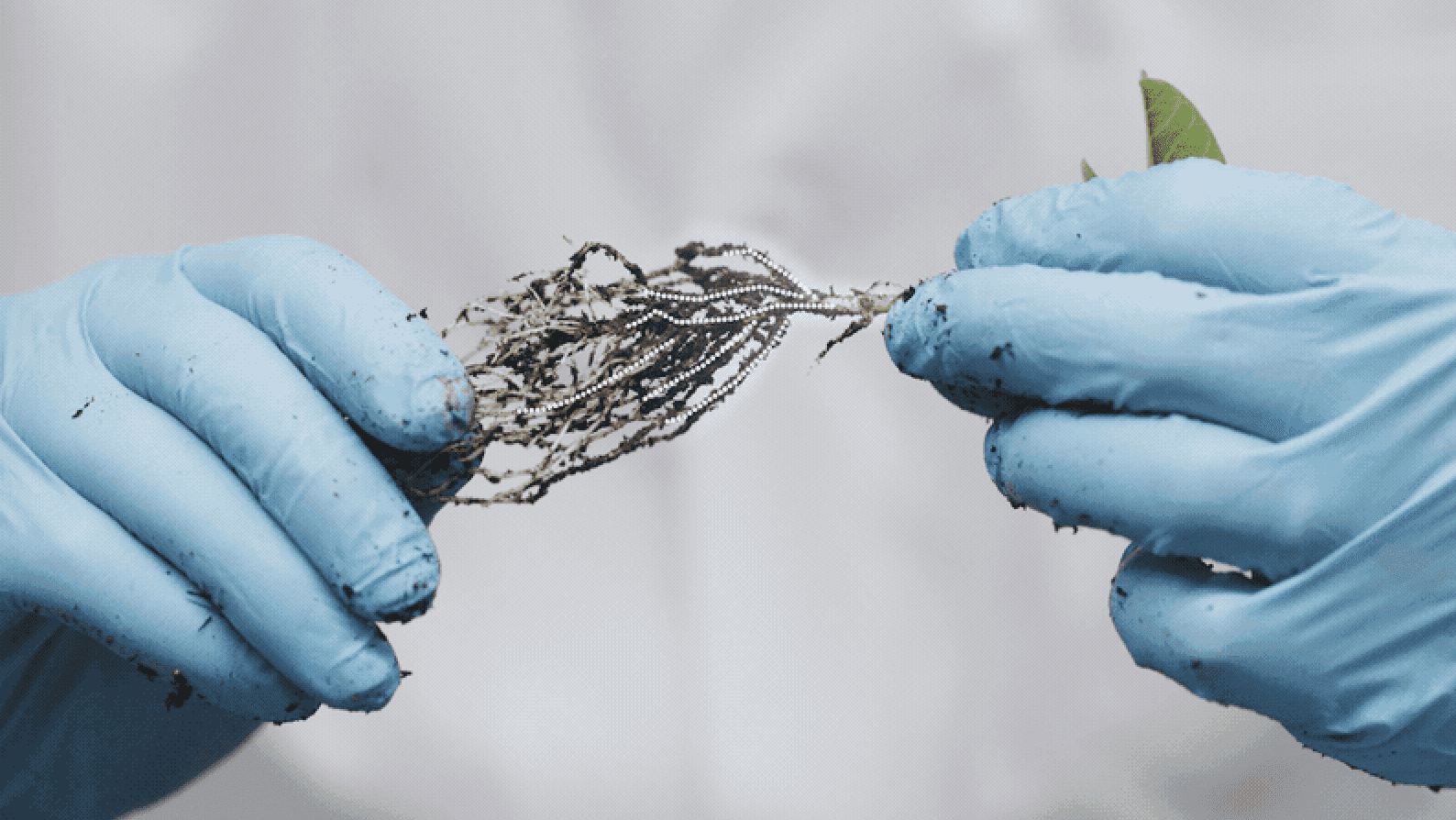
BOB-seq labels the RNA before any enzyme touches it. Cells sit for 10 minutes in a reagent, NAI-N3, that crosses the membrane and plants small chemical handles along each RNA strand. A click reaction that needs no enzyme or catalyst then fastens a short DNA barcode to each handle. With every sample tagged, all of them can be mixed in one tube and processed together.
The copying step records the tag. When the enzyme that copies RNA into DNA reaches a handle, it stalls and jumps onto the attached barcode, so the barcode and the stretch of RNA it just read end up on one piece of DNA. Starting copies at random points rather than at the tail spreads coverage across the whole gene. The spacing of the handles sets each piece at about 350 bases, so the library never needs chopping. The authors say that, to the best of their knowledge, it is the first method to pool RNA samples before any enzymatic step.
The proof of concept is a 24-sample screen of human HEK293T cells treated with cycloheximide, risdiplam, or a splice-switching antisense oligonucleotide, with untreated mouse RAW 264.7 cells as a species control. It followed 186 experiments to optimize barcode transfer, per the preprint. Barcodes matched the correct species 99.7% of the time on average. The preprint reports nearly 25 times more splice junctions than DRUG-seq and 6 times more than prime-seq. At 25 nM, risdiplam reduced SMN2 exon 7 skipping as expected, and the screen also picked up splicing changes in FOXM1 and MADD, two known off-targets of the drug.
Amin said the splice junction gain is the number he wants drug discovery teams to remember. The 0.3% barcode swapping rate, he said, is there to show that accuracy was not traded away to get it.
The paper is candid about its limits. The comparator numbers come from previously published datasets, the DRUG-seq data were generated in a different cell line, and replicate counts are low. Because isoforms are rebuilt from pieces of about 350 bases, distant splicing events on the same molecule cannot be linked as they can with long reads.
The method serves Sculpta's pipeline of splice-switching antisense oligonucleotides for Alzheimer's, Parkinson's and ALS. The company won the 2025 Alnylam BioVenture Challenge, according to organizer Nucleate, with a pitch on splicing analysis at single-cell resolution.
"We are working towards the first comprehensive atlas of RNA processing at single cell resolution for new therapeutic target discovery."
The atlas points to targets. BOB-seq is meant to show, across many compounds at once, whether a candidate shifts the isoform balance as intended and what else it touches.
"Setting up hundreds of individual reverse transcription and PCR reactions for qPCR has always felt absurd and anachronistic to me."
"We see our method as a much more reliable readout for ASO screening. We want whole transcriptome screens to be as accessible, simple, and (eventually) as rapid as qPCR."
So far the results are bulk screens in cell lines. Amin points to ALS and formaldehyde-preserved tissue as next, while the preprint presents single-cell, spatial and preserved samples as possible extensions rather than results.
"I know very well that our limited ability to measure changes in the brain with sufficient resolution and breadth is the single biggest barrier to even knowing what even occurs in neurodegeneration."
The analysis code is public under an MIT license, the Patchwork splicing software stays proprietary, and Sculpta has filed provisional patents on the chemistry. All authors are Sculpta employees, contractors or shareholders.
"Given this novelty and strength of our IP filings, we feel confident about sharing this with the scientific community now. This release is just the beginning."