Capital Markets
Hedging on Hype
How Four Pharma Rivals Used One Venture Studio to Test-Drive Every AI Trend of the Decade

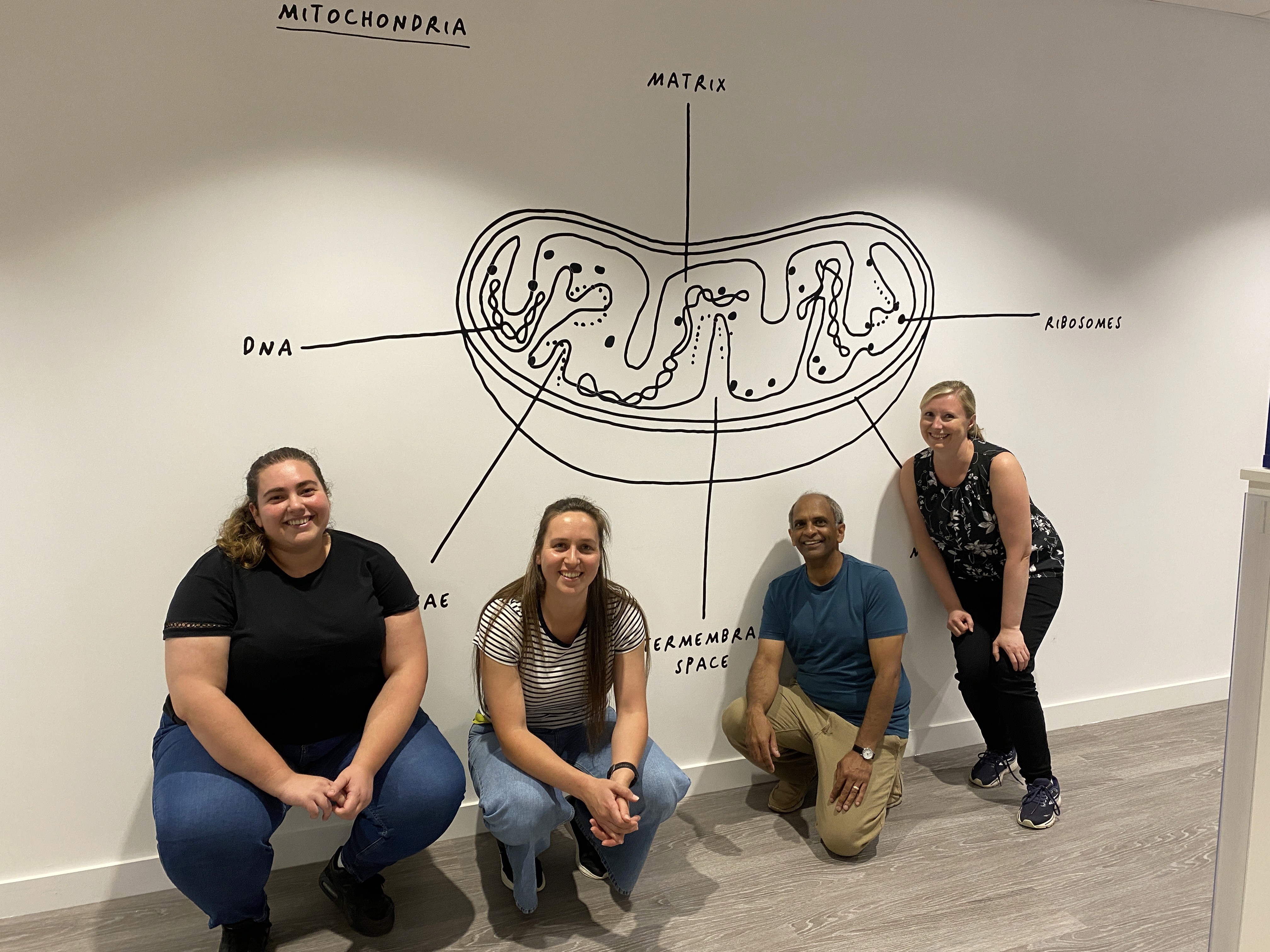
Sharon Gour Arie, COO of AION Labs
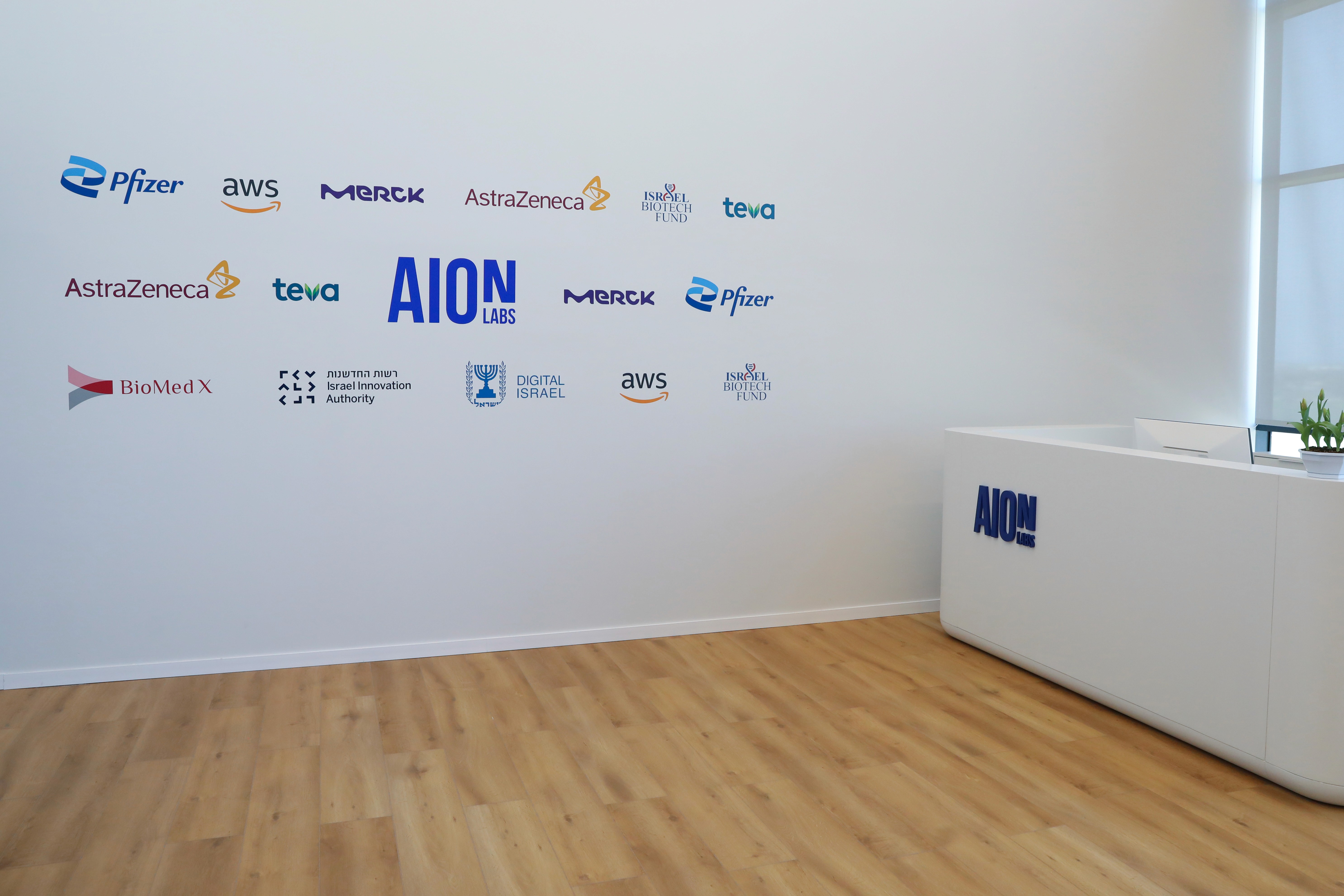
Pfizer, AstraZeneca, Merck, and Teva are unlikely bedfellows. They chase the same diseases, the same indications, and compete head to head for market share across a long list of products. Getting any two of them to share a lab bench would be strange. Getting all four to co-found and co-own the same company should be impossible.
Yet in 2020, in Israel of all places, they did exactly that, forging an alliance to test the technology that has since become the inescapable front line of nearly every story in this industry: AI.
“If you ask me today, I don’t know if AION Labs would have been established,” says Sharon Gour Arie, COO for the venture studio those four rivals built. “Because AI today is more competitive for them. They’re doing so much internally.”
That it happened at all is a product of when it happened. Rewind to 2020 and the world looks nothing like now. COVID has locked down the planet. ChatGPT won’t arrive for two more years, and if you’d said “AI” to a pharma executive, they’d have pictured something far narrower than what the phrase means today. It was, quite literally, the eve of AlphaFold. The partnership talks were underway just as DeepMind stunned biologists at CASP14, predicting protein structures at near-experimental accuracy and signaling that computation was about to reach places in biology it never had before.
That was the bind. AI was clearly about to matter, but nobody knew which ideas would pay off, the tools were expensive, the talent was scarce, and betting wrong meant torching a nine-figure R&D budget on a hunch. Four competitors found a way to go first without going alone. In December 2020 they won a competitive tender from the Israel Innovation Authority to build AION Labs, a venture studio they would fund and run jointly, with AWS as tech partner and the Israel Biotech Fund as VC backer. The arrangement solved a real problem: four rivals could never pool proprietary drug work, but they could share the cost and the lessons of finding out whether a given AI approach worked at all, as long as it happened one step removed, inside independent startups on neutral ground.
Israel was the natural place to try it. The country has a deep bench of AI engineers, and neither AstraZeneca nor Pfizer had ever run R&D there, only commercial operations, so no one had turf to defend. “It’s not Boston, it’s not London,” Gour Arie says. That was the appeal. Neutral ground for rivals who compete everywhere else.
“I’m joking that half the time we’re like Tinder bio.”
What they built there works less like an incubator than a matchmaker. A pharma partner surfaces a hard problem; AION goes and finds the scientist to build a company around it, often straight out of academia, then hands over roughly $1 million, two years of runway, a borrowed CFO, and a direct line into pharma R&D that a normal startup would spend years trying to open. In exchange, the four partners feed in challenges, sit on the investment committee, and co-develop from day one. And because putting four competitors around one table means no one can build against a shared drug target, AION builds platforms rather than single assets. That constraint, born of antitrust, turned out to define the whole portfolio.
A Portfolio That Reads Like a Timeline of AI Hype
Because each company is a fresh bet on a fresh idea, the portfolio doubles as a calendar. Line the startups up by launch date and you get an almost perfect record of whatever the industry was excited about that year.
2022, OMEC.AI. The first company was the most 2022 idea imaginable: point machine learning at messy preclinical data and predict which drugs will survive clinical trials. Its two founders came straight from Mobileye, Intel’s self-driving unit, the purest expression of the moment’s belief that AI talent from any domain could be dropped into biology.
2023, DenovAI. A year later, generative protein design was the wave, riding directly behind AlphaFold. DenovAI’s pitch was to design antibodies entirely from scratch, licensing technology out of EMBL. “Design biology itself” was suddenly a sentence people said out loud.
2024, TenAces. By 2024 the fashionable modality was targeted protein degradation, and TenAces launched to hunt molecular glues with machine learning, promising to reach the roughly 85% of proteins considered undruggable. Same studio, new buzzword, fresh team.
2024, ProPhet. Later that year came the generative-everything era, and ProPhet arrived speaking it fluently: diffusion models and large language models, aimed at generating small molecules for targets with almost no structural data. If you wanted to know what phrase was trending in AI drug discovery in late 2024, the press release told you.h team.
2025, Renasis Bio. The next challenge pharma handed AION came from cybersecurity, not biology: could threat-detection techniques be repurposed to find druggable pockets on RNA? Renasis Bio's answer was an AI platform that identifies those pockets and designs small molecules to hit them, upregulating gene expression at the RNA level, a target space AION pegs at $100 billion across hundreds of diseases and tens of millions of patients.
Around them sit gene editing (Cassidy Bio), tumor-heterogeneity modeling (Cellyrix), and epiproteomics (Promise Bio), each one a small time capsule of the idiom pharma was chasing the month it launched. That is the sandbox doing its job: four companies watching a dozen versions of the future get built, cheaply and in public, on ground none of them owns.

The First Exit
The experimentation paid off in January 2026. CombinAble.AI, an antibody-optimization startup founded inside AION in 2023 by Daria Kokh and Noam Katz, was acquired by insitro, Daphne Koller’s San Francisco AI-therapeutics company, which folded the team into a new Israel R&D center.
CEO Mati Gill has called it the first-ever acquisition of an AI pharma company in Israel. CombinAble was built from scratch, no background IP, no existing team, and reached acquisition in a little over two years. For a studio whose whole premise is that four rivals can manufacture companies from a cold start, that’s the clearest proof the machine works. Across the portfolio, AION points to more than 22 proofs-of-concept run with its partners and over $30 million in total funding.
More are lining up behind it. DenovAI and Promise Bio are both currently raising Series A rounds, early evidence that CombinAble’s exit is not a one-off but the leading edge of a cohort of AION-built companies reaching that stage.
Not everything works, and Gill is blunt about the recurring flaw: most of these companies struggle to find a business model that isn’t just making a drug. Two of the nine have closed. “That’s part of the game as well,” Gour Arie says. She isn’t selling a story where everything works, just one where enough does, and now she has an exit to point to.
The Bet That Wouldn’t Get Made Today
Which brings us back to where we started, and to why Gour Arie says AION couldn’t be built today. The reason is almost the opposite of the one that created it. Every major pharma now runs its own AI unit. The shared blind spot that pulled four rivals into one sandbox in 2020 has closed, precisely because sandboxes like this one helped close it. The experiment worked well enough to put itself out of a job.
So AION went looking for the next thing pharma is too uncertain to touch alone. This time it’s quantum computing, and the setup rhymes with 2020: loud with promise, no clear use case, no one inside pharma sure what to do with it. “Some people say that it’s bullshit,” she admits, “and in just twenty years we’ll see something.” Nobody, including the companies funding her, knows whether quantum will matter in five years or twenty. That uncertainty is the qualification, not the disqualification. It’s exactly the kind of bet the sandbox exists to make cheaply.
In 2020 the shared bet was AI, and it paid off with an exit on the board. In 2026 it’s quantum, same structure, same logic, same four companies splitting the risk. She’s making it anyway.