Sugar, Sun and Sensing: Why Australia Might Be the First Western Bioelectric State
If Australia gets its act together, it won't just be building a bioeconomy. It will be providing the template the rest of the world has been waiting for.

This piece was originall published on substack: https://open.substack.com/pub/cammmwatson/p/sugar-sun-and-sensing-why-australia?utm_source=share&utm_medium=android&r=21c6j8
I’ve spent the last few months mapping synthetic biology ecosystems across Asia Pacific. Japan was the first report in this series: mature, industrially embedded, undercoordinated at the growth stage. Australia is a different story, and in some ways a more consequential one.
Australia might be the place where the conditions for assembling a complete bioelectric tech stack outside of China are most legibly in place: modular, market-oriented, and replicable. Not because it is the biggest market or the most sophisticated ecosystem, but because the components are there in a way they aren't elsewhere. Whether Australia connects them is a genuine open question, but if it does, it becomes a proof of concept the rest of the non-Chinese world has been waiting for.
What the bioelectric stack is, and why it matters
The framing underpinning this analysis is the bioelectric tech stack. It treats the feasibility of the bioeconomy as fundamentally an energy problem: cheap electricity is the input that makes biological manufacturing competitive, and the economies that get there first will determine who owns the next layer of industrial chemistry. The stack runs from feedstocks and fermentation infrastructure through the biology itself into application verticals, with sensing and control as the layers that monitor and run the whole process. China has assembled this stack more completely than anywhere else, through state coordination and sustained infrastructure investment that most Western economies can’t or won’t replicate. Here is how Australia’s version looks today.
What Australia has already assembled
Feedstocks are the base of the stack, and Australia’s position is genuinely strong. The sugar cane industry in Queensland provides a co-location opportunity that few regions can match: abundant, cheap, already-processed feedstock adjacent to existing infrastructure and logistics networks.
More important than cost, Australia is a massive net exporter of sugar; China, despite its biomanufacturing scale, consumes as much as it produces. Feedstocks are the one layer of the bioelectric stack that cannot be relocated, automated away, or built from scratch through state investment. The GFI APAC and Hawkwood analysis of fermentation manufacturing site selection across nine APAC countries ranked Australia near the top on feedstock potential. When feedstock is the dominant cost driver (and in many fermentation scenarios it is) this matters more than most ecosystem analyses acknowledge.
Queensland is the most concrete expression of this. The Greater Whitsunday region around Mackay has been quietly assembling what might be the most coherent regional biomanufacturing proposition in the country: the QUT Pioneer BioPilot recently completed an $18 million upgrade, the state government has been running a Biofutures strategy since 2016, and BioVision, launched in late 2025, maps the region’s feedstock assets, infrastructure, and workforce capacity in a format designed for global investors. It reflects a decade of deliberate effort to position a post-coal regional economy as a biomanufacturing destination.
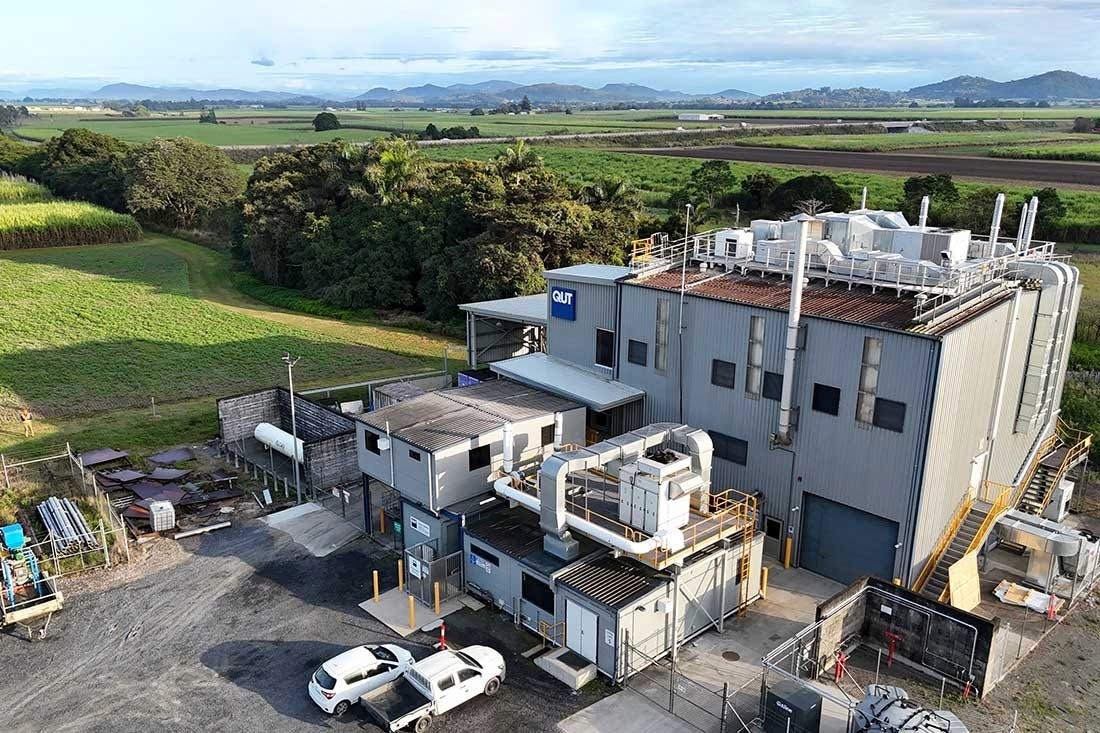
Figure 1: QUT Pioneer BioPilot is a cutting-edge facility with the latest in fermentation technology, fully equipped for purification and downstream processing. Designed for flexibility and scale, it supports the development of high-value food and industrial products through precision fermentation and advanced biomanufacturing.
Fermentation infrastructure exists along the east coast (pilot-scale facilities, some contract manufacturing capability, early elements of a scale-up pathway) and the geography from Melbourne through Sydney and Brisbane up to Mackay maps onto a natural scale progression. The problem is that those nodes are largely disconnected rather than forming a coherent pathway. One ecosystem builder described it as “doing twice as much, half as well”: parallel infrastructure built by universities and state governments in isolation, rather than connected assets that a founder can actually move through.
The practical consequence is that some of Australia’s most commercially advanced biosolutions companies, having validated their technology at pilot scale, are now looking to Chinese fermentation asset owners for the industrial volume they can’t access at home. The logic is rational; the geopolitical implications are not. Australian technology, manufactured in China, is exactly the outcome a domestic infrastructure layer exists to prevent.
The biology layer is where Australia’s universities genuinely shine. The Commonwealth Scientific and Industrial Research Organisation (CSIRO) leads in transgenic plants, recombinant proteins, and a growing CRISPR capability. Monash, Queensland, Sydney, and Melbourne all have strong synthetic biology research programs. Patent data corroborates this: CSIRO is the leading Australian applicant for transgenic plants and recombinant proteins in filings, with Monash the other significant CRISPR applicant.
However, the broader picture is that Australia’s synbio patent applicants are almost entirely non-commercial entities; the first commercial company, CSL, sits eighth in the rankings. The research base is genuinely productive; the commercial translation is not. Australia grew synbio patent filings at 6.4% CAGR during 2014-23, ahead of Japan and Germany but well behind China’s 21% and South Korea’s 17%, where commercial applicants dominate and market pull drives the compounding. The CSIRO roadmap’s $30 billion opportunity by 2040 remains credible; so does its diagnosis that the bottleneck is industrial translation, not biology. Phil Morle, partner at Main Sequence Ventures and one of Australia’s most prominent deep tech investors, has a blunt test: if it doesn’t need a forklift, it’s not relevant. Most of what Australia’s universities are producing doesn’t yet need a forklift. Without that translation, Australia’s research base becomes a pipeline that feeds other countries’ manufacturing, including, as we’ve already seen, China’s.

Figure 2: Top 30 synthetic biology patent applicants in Australia, 2014-23. The list is dominated by universities, government research agencies and medical institutes; commercial entities are significantly underrepresented. Source: Potter Clarkson / Inevus Advanced Analytics.
Non-pharmaceutical application orientation has coalesced around food: cultivated meat, precision fermentation of proteins and fats, molecular farming, cellular agriculture. This is contested as a strategic choice, and I’ll come back to it. But as an application layer it functions: it generates corporate engagement, it maps onto APAC demand, and it has produced real regulatory outcomes.
APAC market access is where Australia’s geography generates asymmetric advantage. FSANZ is considered one of the more predictable regulators in the region, with clear timelines and a track record of navigating novel approvals; Vow Food’s approvals in Singapore and then Australia demonstrated that the pathway can actually be navigated, a genuinely differentiated asset in a global alt-protein landscape where most products are still waiting outside regulatory doors. Singapore is close enough to treat as a natural regulatory extension. Japan’s large industrial biotech corporates, Ajinomoto, Kaneka, Toray, have deep manufacturing reach across the region and have historically engaged with interesting technologies early. Major Australian energy companies, facing substantial emissions obligations, have been quietly building biotech-adjacent investment and partnership portfolios. The demand signal is real even if it isn’t yet organised into a coherent pull mechanism.
What’s still missing from the stack
Energy is not so much missing as underappreciated. Biomanufacturing at scale is fundamentally an energy problem: in the amino acid cost structure that most clearly illustrates this, glucose and electricity together represent the majority of production cost. Australia is building renewable capacity faster than its transmission infrastructure can absorb: curtailment across the National Electricity Market reached approximately 8 TWh in 2025, up 61% on the prior year, with negative electricity prices now occurring in nearly half of all dispatch intervals in South Australia. For a biomanufacturing facility co-located with solar generation, energy costs approach zero. That is not a distant aspiration, it is an engineering problem that is very close to being solved, and one that would structurally change the economics of biological manufacturing in Australia without policy intervention.
Sensing is the most underinvested layer in the entire stack; not just in Australia but globally. Most bioprocesses run with limited real-time observability. Scale-up remains partially guesswork. Many failures attributed to execution trace back to inadequate sensing rather than bad biology. The opportunity is to achieve for fermentation what battery management systems achieve for lithium-ion cells: continuous reading of internal state, closed-loop adjustment, and the reliability that turns a scientific process into an industrial one.
Once a process is legible, there are two response layers. AI and software (the virtual layer) are well-covered globally and freely available. Australia can import them. The physical layer is more interesting: responding to what sensing uncovers (adjusting temperature, pH, feed rates, dissolved oxygen) at the speed and scale the process requires is something humans physically cannot do in real time, regardless of how many are available. Physical automation is the response layer that makes sensing actionable. This is not a headcount reduction argument; it is a capability argument. The people you need are those who can design, interpret and oversee highly instrumented processes.
Bioelectric sensing remains genuinely open globally: no country has established dominance, no standard interface has emerged. Australia’s mining sector has built real instrumentation and sensing capability over decades, and CSIRO has produced commercial spinouts that compete globally. For a mid-size economy it punches above its weight in industrial sensing. That expertise has not yet been pointed at fermentation.
The vertical question and why it matters for the proof of concept
If Australia is going to demonstrate that the bioelectric stack works outside of China, the application layer matters enormously. Not just because it determines what gets made, but because it determines whether the demonstration is legible to the rest of the world.
The current answer, food, is understandable but underexamined. The countries that have built genuine global positions in biotech have done it by picking narrow verticals and going very deep; an uncomfortable specific bet, not a broad narrative. Denmark owns industrial enzymes (primarily through Novonesis) in a way that shaped the global market for decades. Singapore has positioned itself as a regulatory-forward hub for alternative proteins. Not a manufacturer, but an approval gateway and test market for APAC expansion. Taiwan is moving into high-value therapeutics CDMOs, riding semiconductor-era manufacturing discipline into biology. South Korea built through fermentation heritage (kimchi to amino acids to pharmaceuticals) and is now moving into biologics CDMOs. Japan’s large industrials are looking to embed biotechnology into existing manufacturing rather than building a parallel sector, making the transition legible to their capital base without requiring a new narrative. The UK, which like Australia went heavy on food, is now quietly pivoting toward high-margin, low-volume applications.
The more instructive pattern across all of these cases is not just what was chosen but how. The verticals that produced durable positions were selected not because they generated the best narrative, but because the offtake existed; committed buyers willing to sign long-term agreements before the infrastructure was built. Samsara Eco’s decision to pursue nylon recycling before PET illustrates the logic precisely: nylon was not the bigger market or the more exciting story, but it was the vertical where the offtake was real and the path to a financeable facility was therefore clear. Lululemon signed a ten-year supply agreement. The facility became buildable. PET, for all its scale, remained a future problem. The sequencing was deliberate and it was driven by demand, not ambition.
Food is not absent from any of these stories, but in each case it functions as an entry point rather than the strategic destination. It is also an unforgiving proving ground: cultivated meat carries unresolved consumer adoption risk and a cost curve that has not bent as projected; precision fermentation proteins compete against commodity producers with fully depreciated assets and no incentive to yield ground. The honest question for Australia is whether the food framing reflects genuine comparative advantage or whether it was the narrative that generated political consensus, and whether, having achieved real regulatory wins, the ecosystem is now free to ask where committed offtake actually exists.
There are areas where Australia's position looks more distinctively strong: agricultural biology at the intersection of CSIRO's research strengths and APAC food system needs; marine and environmental biology drawing on unique biodiversity; and the sensing and control layer itself, where the opportunity is not vertical dominance but something more valuable.
Precision sensing applied to bioprocessing could give Australia an ASML-like position in the value chain: owning the intelligence infrastructure layer that makes any fermenter, anywhere, genuinely autonomous. Australia already has serious fermentation innovation to build on (Cauldron, Vow and Algenie among others) but the sensing layer that would make those processes industrially reliable remains underdeveloped. That pairing is the opportunity. It will be developed fully in a forthcoming piece. The window to claim it is still wide open.
Regardless, the framing shifts from “which vertical can Australia dominate?” to “where does the offtake already exist, or where can it be built, that makes a first facility financeable?” That is the question that turns a compelling ecosystem story into a buildable proof of concept, and it is the question that the food framing, for all its political utility, has not yet answered cleanly.
The scale-up gap and what could close it
Australia’s capital market for deep tech is not without foundation; the funds that exist are doing serious work. The problem is structural: the capital available is the wrong type at the wrong stage. What biomanufacturing companies need most is scale-up finance, the bridge between proven technology and commercial infrastructure, and that is precisely where the market is thinnest; driving some of Australia’s most advanced biosolutions companies toward Chinese fermentation partners as the path of least resistance, with all the geopolitical complexity that entails.
On the funding side, the most promising structural shift is already underway. Australia’s superannuation system, one of the largest pools of pension capital in the world, has been backing life sciences with long-term conviction for years, with funds including HostPlus, HESTA and AustralianSuper consistently supporting private markets in the sector. Brandon Capital, one of Australia’s largest life sciences VC firms, has made this argument directly to UK audiences: that superannuation’s long-term backing of life sciences is the model British pension funds should replicate. The May 2026 budget changes to ESVCLP and VCLP explicitly expand superannuation’s ability to invest for longer periods and make larger contributions into growth businesses. Patient, long-horizon capital suited to biomanufacturing is becoming more available; the question is whether the deal structures exist to deploy it into infrastructure rather than just early-stage equity.
On infrastructure, Australia is further along than most analyses acknowledge. The east coast geography maps onto a natural scale progression, and Queensland has already demonstrated what deliberate coordination around shared assets produces. An alternative model being utilised elsewhere is the SPV structure: separate the manufacturing asset entirely from the biotech company, finance it like a utility against a long-term offtake agreement, and hand the keys to a single tenant. Both models are available. Neither is moving at scale.
The reason is the same in both cases: corporate offtake. Australian energy majors and other large corporates have signalled willingness to adopt bio-based supply chains when the economics work. The economics don’t work without scale. Scale doesn’t happen without offtake commitments. And offtake commitments don’t materialise without either government mandate or financial incentive. China broke this deadlock through state incentives and mandates. Australia has the willing corporate partners; it lacks the mechanism to activate them.
Government incentives are that mechanism, and they are almost entirely absent. The GFI/Hawkwood analysis found that non-dilutive capital support, CAPEX grants, loans, or guarantees, delivers the highest return on investment of any incentive type for both companies and governments, yet Australia scores worst in the APAC region on exactly this measure. Government could also act as anchor customer directly, as it does in defence and critical minerals, but has not yet done so in biomanufacturing. The structural advantages are there. The piece that would make them run isn’t expensive. It’s just absent.
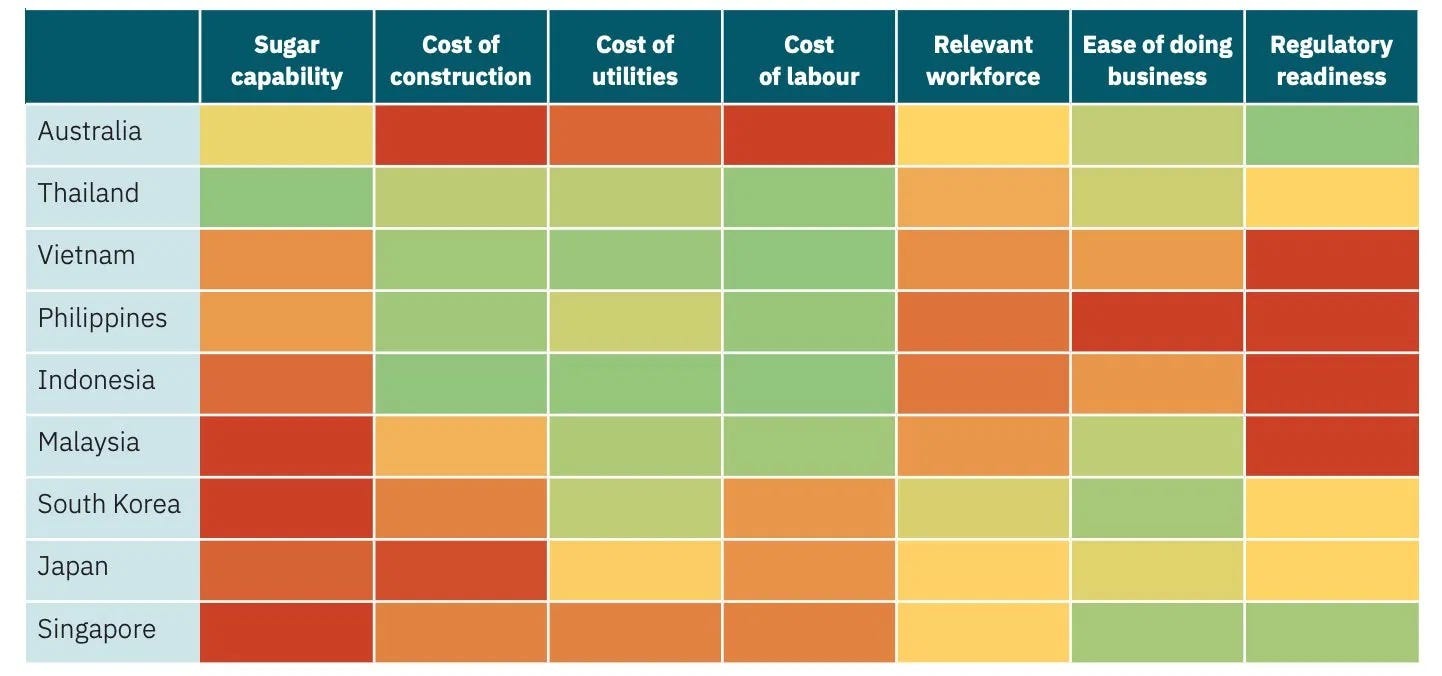
Figure 3. APAC biomanufacturing site selection competitiveness across key indicators. Source: GFI APAC / Hawkwood Biotech, 2025.
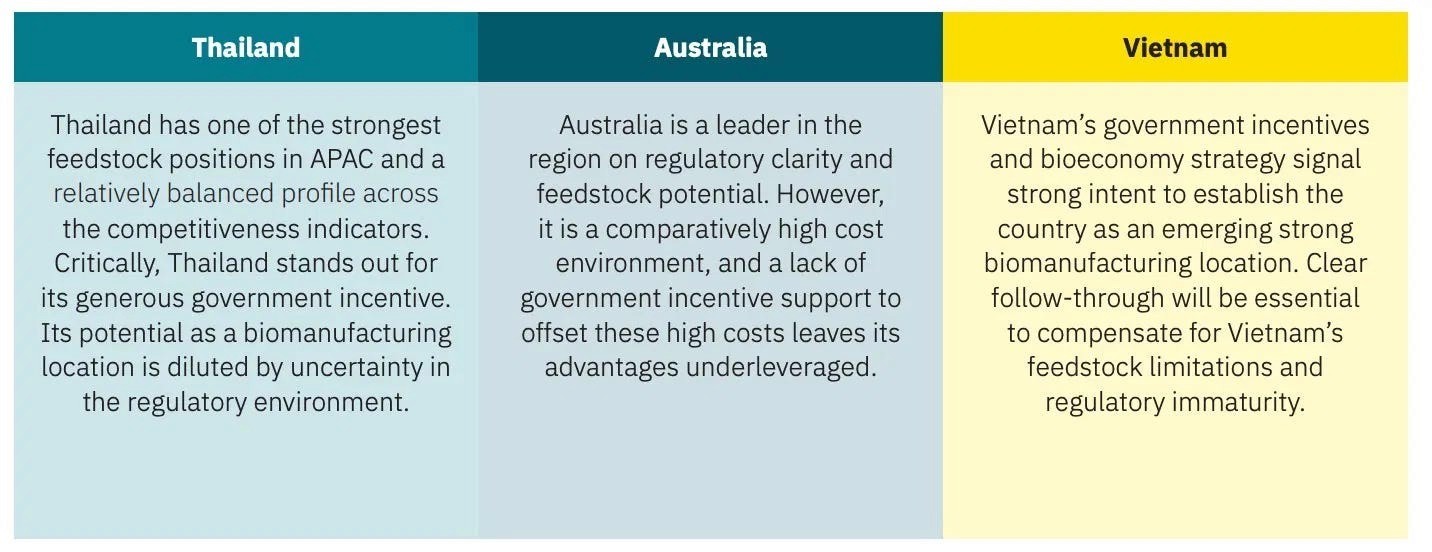
Figure 4. Country profiles for the three shortlisted APAC biomanufacturing locations. Source: GFI APAC / Hawkwood Biotech, 2025.
The heatmap makes the competitive threat concrete: Thailand and Vietnam score better than Australia on construction costs, utilities and labour, and Thailand in particular stands out for generous government incentives. Australia’s regulatory clarity and feedstock position are real advantages. But at the project finance stage, cost environment and government incentives are the deciding variables, and on both Australia is losing ground to direct competitors. The risk is sequential: Australia’s homegrown champions are already offshoring scale-up to China today, and Southeast Asia is positioning to capture the next wave. A targeted government response would cost a fraction of what Australia stands to lose.
All of the above are partial fixes. What would close the gap properly is coordinating incentives across the whole system, shared risk, shared upside, structures that align institutions, investors and companies rather than leaving each node to optimise for itself. Phil Morle calls this radical collaboration: competitors standing in the same room figuring out how to improve conditions for all. There is genuine appetite for this in the Australian ecosystem, and models like the biokeiretsu point toward what it could look like in practice. But translating them into a Western-legible, university-heavy context is unsolved.
Note: The May 2026 federal budget introduced a mixed picture on the incentives front. Expansions to VCLP and ESVCLP asset caps and an overhaul of the R&D Tax Incentive are genuinely useful. But a proposed restructure of capital gains tax, replacing the 50% discount with inflation indexation and a 30% minimum rate from July 2027, has unsettled the startup and angel investment community. A sector-specific consultation on how the changes interact with early-stage equity incentives is underway; the outcome is unresolved at time of writing.
Why the rest of the world should be watching
China has proven that the bioelectric stack works, at scale, with outcomes that are reshaping global biomanufacturing economics. The US is assembling its own version, but it is built on cheap natural gas and petrochemical infrastructure; replicating petrostate economics in a biological wrapper rather than demonstrating the electro-state transition. What neither demonstrates is whether the stack can work for everyone else: modular, market-driven, legible to Western capital and regulatory frameworks, without state coordination or superpower-scale resources, and actually running on electricity rather than fossil fuels.
Australia might be the most plausible candidate for that demonstration. It has feedstocks, and crucially a sugar surplus that China cannot replicate. It has a regulatory environment that carries genuine weight across APAC. It has biological capability and proximity to the markets that need the output. And it has cheap renewable energy arriving whether or not the bioeconomy plans for it. A biomanufacturing facility running on curtailed solar is the bioelectric stack as theorised, not a workaround. That is a demonstration nobody has made yet.
The gaps are real. The energy layer needs to be claimed deliberately. The sensing layer needs a national bet. The vertical identity needs to sharpen from broad food narrative to the specific positions where committed offtake exists. The capital and coordination fixes need to move from aspiration to architecture. None of those gaps are structural. They are choices.
If Australia makes those choices, it won’t just be building a domestic bioeconomy. It will be providing the existence proof that mid-size, market-oriented economies have been waiting for: that the bioelectric stack can be assembled without state direction or petrostate subsidy, demonstrated at real scale, and made available as a template. That contribution is larger than the $30 billion CSIRO figure implies. It is the reason people who don’t care about Australia specifically should be paying attention.
Whether Australia sees itself in those terms and organises accordingly is the open question. The window is narrower than it looks from the inside.
This report is part of a series on APAC synthetic biology ecosystems. It draws on patent data analysis in collaboration with Potter Clarkson and Inevus Advanced Analytics, conversations with founders, investors, corporate strategists, and ecosystem builders across the Australian synthetic biology sector, including public commentary from Phil Morle of Main Sequence Ventures, and published sources including the CSIRO National Synthetic Biology Roadmap, GFI APAC’s site selection analysis for APAC fermentation manufacturing (2025), and the Greater Whitsunday Biomanufacturing Blueprint. All interview sources are anonymous.