Ai Digital Biology
Bio Design
Bioeconomy Policy
Biomanufacturing Scale Up
Biopharma Solutions Tools Tech
Biosecurity Bioethics
Capital Markets
Consumer Products
Desci
Engineered Human Therapies
BIO 2026: A Data Driven Perspective of the Largest Pharma Conference
Every recap said BIO 2026 was about AI and China. So I counted who actually showed up: 9,743 delegates, 1,562 booths, 443 sessions. The data tells a different story.

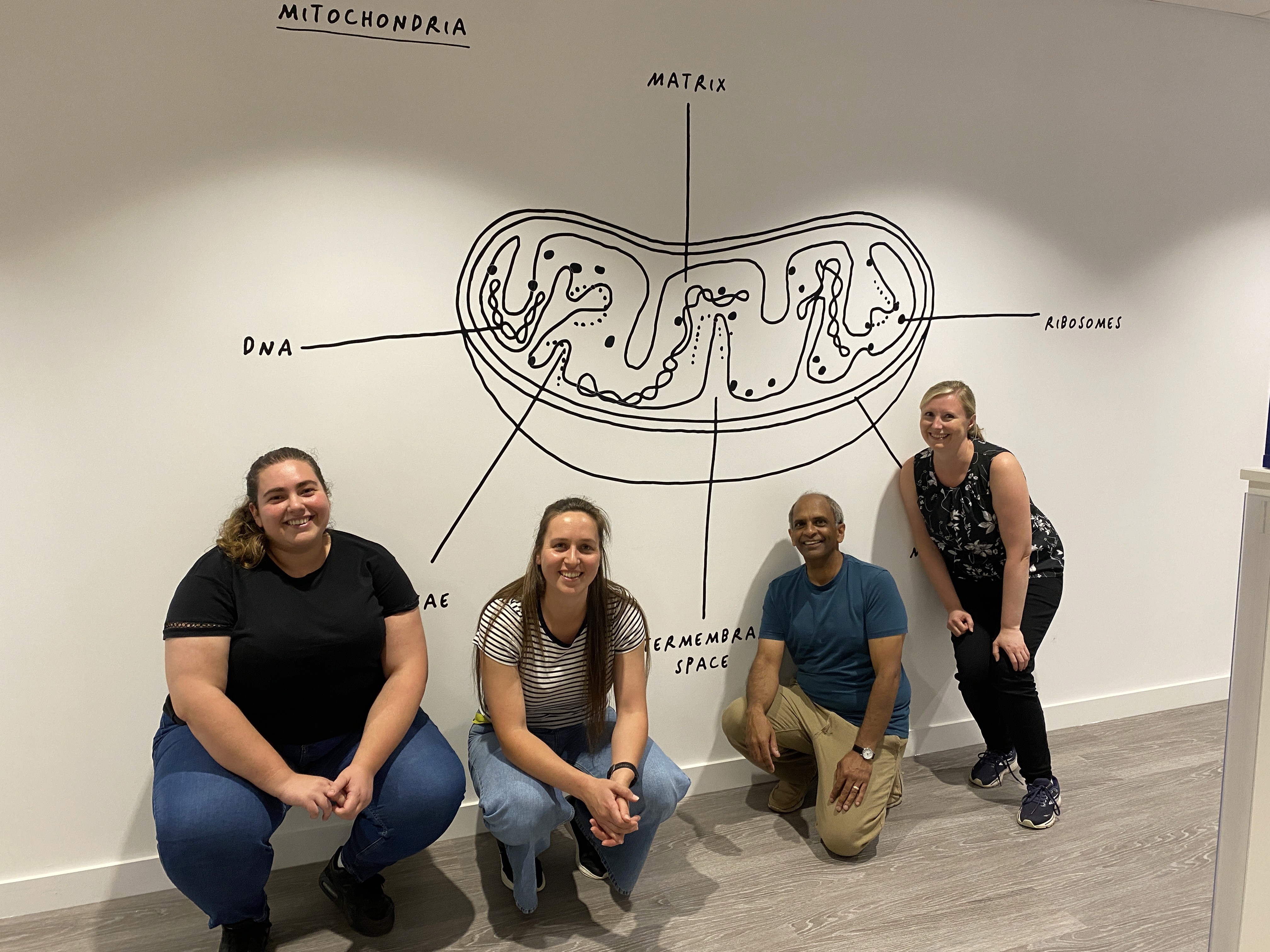
Aaron Blotnick and Stephen Hubbard on the Main Stage at #BIO2026
I spent the weekend pulling the raw numbers from the public BIO website to try and gain a more objective perspective of the conference. The registration export, the exhibitor list, the speaker roster, the full session catalog — 9,743 BIO Partnering delegates, more than 1,500 booths, 908 speakers, 443 sessions. I've attached a PDF report with Graphs and Figures to help make sense of things.
Here's what the spending says.
1. A booth and a meeting pass are two different confessions
The first thing to understand is that BIO sells two completely different things, and buying one doesn't mean buying the other. A booth is a marketing spend. It buys visibility on the exhibit floor. A BIO Partnering registration is a dealmaking spend. It buys a seat at the meeting-scheduling system where actual business gets done. Rank places by each and the lists barely overlap, which is the whole game.
California tops both — about 73 exhibitors and close to 800 dealmakers, first by a mile in each. Below that the two diverge fast. Texas buys the second-most booths of any state but doesn't crack the top five for dealmakers. New York and Pennsylvania do the reverse, sending large meeting delegations on relatively modest floor presence. Massachusetts sits second in dealmakers with under 600, well behind its own reputation for booth dominance. If you judged the action by walking the hall, you'd rank these states completely wrong. The booths tell you who wanted to be seen. The meeting passes tell you who came to work.
2. Eli Lilly bought the biggest seat at the table
Some numbers don't need much interpretation. Eli Lilly registered 115 people for BIO Partnering. The next-biggest corporate delegation, Johnson & Johnson, sent 59. After that it falls into the high thirties — Genentech and Roche, Daiichi Sankyo, Novartis. You can find a dozen reasons to buy a large booth, but you don't fly 115 people across the country and pay roughly $3,500 a head for partnering access unless you intend to come home with deals. Lilly didn't come to exhibit. It came to shop.
3. The program the organizers built was about approval and money
The session catalog is where you can hear what BIO itself thinks the industry needs to talk about. Strip out the paid company pitches — company presentations, Start-Up Stadium slots, country-pavilion sessions — and you're left with 215 curated sessions. Count what they cover, and the supposed headline of the week comes in third. Regulatory and FDA topics turned up in 48 of them. Investment and capital, 53. AI and machine learning, 42 — behind both. China and Asia as a theme appeared 8 times, fewer than rare disease.
AI was genuinely present, with its own dedicated track, and it outpaced other major themes like manufacturing and cell and gene therapy. But a curated program is a set of choices about what deserves limited stage time, and the people building it spent more of it on the two things that actually decide whether a drug reaches a patient: clearing the regulator and finding the money. The hallway chatter and the official agenda were not about the same subject.
4. AI had a seat at the table — just not the head of it
If BIO 2026 were really the AI event everyone described, the people building AI would have dominated the main stages. They didn't, but they weren't absent either. NVIDIA led with 5 speaking slots. Microsoft had 2. A Google DeepMind spinout, Isomorphic Labs, had one. So did Anthropic. And Insilico Medicine — an actual AI-drug-discovery company, not an infrastructure supplier — landed 4 slots, one behind NVIDIA.
Add all of that up and it's still less than Genentech got by itself, and far less than the regulators. That's the real finding: AI wasn't shut out, and it wasn't tokenized down to one chipmaker either. It showed up in real, plural numbers — mostly through AI-native biotech companies rather than outside tech firms — and it still lost the airtime fight to pharma and the agencies that approve its drugs.
5. The regulators out-talked nearly every drug company
Look at who held the microphone and the priorities get even clearer. After the host organization, the two most-featured bodies on stage were the European Medicines Agency, with 22 speaking slots, and the U.S. FDA, with 17. Both spoke more than any individual drug company except Genentech. Pfizer, Lilly, and Johnson & Johnson landed around six apiece. An industry that hands its regulators that much airtime is telling you where its real uncertainty sits. Not in the science, not in foreign competition, but in whether the agencies will say yes.
6. The biggest foreign delegation wasn't China. It was South Korea, then Japan.
Now to the story everyone got backwards. The country that sent the most dealmakers outside the United States was South Korea, with 534. Then Japan, with 490. Then a long drop to the UK and Canada in the high 200s and low 300s.
China sent 193 — and did bring a real exhibitor presence too, with 35 booths of its own, plus 55 from Hong Kong and 61 from Taiwan.
For a week whose international conversation was almost entirely about China — the competitive threat, the proposed legislation to block U.S.-China biopharma deals, the question of who's catching up — the mainland delegation itself was one of the quieter ones in the building. The two that came in force were South Korea and Japan, and the gap wasn't close.
7. Korea and Japan came to run the exact play China is supposed to be running
This is the part the China panels missed. Korea and Japan are mature pharma economies sitting on Phase 2 and Phase 3 clinical assets they need to push into U.S. commercial channels through licensing and partnership. That is precisely the strategy the industry keeps warning China is about to unleash. Korea and Japan didn't warn about it. They showed up and did it.
Japan's numbers show the behavior in its purest form: 490 dealmakers on only about 34 booths, the lowest booth count in the top ten next to the second-highest delegation. Almost no floor presence, all meetings. And it wasn't one giant company skewing the figure — four of the fifteen largest corporate delegations at the entire convention were Japanese: Daiichi Sankyo, Chugai, Shionogi, and Astellas. A whole national industry came to transact and skipped the marketing.
South Korea backed its delegation with real money. Booth space plus partnering fees put its estimated spend at about $2.3M — second only to the host country, ahead of Japan's $1.9M and more than double China's $0.85M. And it isn't new. BIO's own materials ranked South Korea the top international delegation in 2025 as well, and this year Korean trade organizations ran their own investor-matchmaking events in San Diego alongside the convention. I moderated the opening talk at one of them, DISCOVER AI × LIFE SCIENCES, organized by KITA — a private Korean trade foundation, not a government body, though government agencies partnered with them on this particular event. It put Korean startups in front of Pfizer, AbbVie, NVIDIA, and a room full of U.S. investors. Two years running at the top, backed by real money and a parallel program built specifically to land deals — that's an industrial strategy, not a coincidence of registrations.
8. The venture money on stage was almost entirely the dealmaking kind
For an event the recaps cast as a launchpad for the next wave of biotech, one firm dominated the venture airtime: Sofinnova Investments, with eight speaking slots — tied with Sanofi and ahead of most pharma companies. It wasn't literally alone; eight other VC firms picked up a slot apiece, Andreessen Horowitz and Ally Bridge Group among them. But nobody came close to Sofinnova's share of the microphone, and the shape of the group tells its own story: no seed funds, no early-stage names, none of the VCs who write first checks.
Which is why Sofinnova's dominance matters more than its slot count alone suggests. It's a crossover and late-stage investor — its model is backing companies that have already proven their science in the clinic and are heading toward commercialization, M&A, and IPOs, not funding ideas. Zoom out and the same pattern holds: north of 100 VC and investment firms registered for BIO Partnering, nearly 200 dealmakers in total, quietly working the meeting system without ever touching a microphone. The conference's investor class was there in force. It just wasn't there to launch anything.
9. India bought a big booth to sell services, not assets
India is the cleanest illustration of the whole booth-versus-meeting split. It bought 72 booths, the fifth-most of any country, behind Canada, South Korea, Germany, and Brazil. By floor presence, India was a serious player. But it sent only 79 dealmakers — short of the top ten, behind France, Switzerland, and Australia.
The gap makes sense once you see who came. Nearly a third of India's delegates worked for contract manufacturers and research organizations, the CMOs and CROs that make and test drugs for hire, against about one in eight across the convention overall. India didn't arrive with a pipeline of late-stage molecules to license. It arrived to win the manufacturing and testing contracts for everyone else's. A booth is the right tool for selling a service; a partnering pass is the right tool for selling an asset. India bought booths.
10. One in eight delegates was there to build the drug, not sell it
India's pattern points at a bigger one. About 1,200 of the convention's delegates — roughly one in eight — came from CMOs and CROs, the service layer that manufactures and tests other companies' drugs. That's a larger contingent than any single foreign country's entire delegation. The supply chain showed up in force, which tells you the dealmaking at BIO isn't only about who owns a molecule. It's also about who's going to make it once the deal closes. You don't bring the factory to the table unless there's something real about to be built.
What it adds up to
Put the spending side by side and the event names itself. The companies that came in force came to buy and sell drugs that already exist. The regulators got the microphone because approval is the gate every one of those deals has to clear. The AI companies that did show up were there because AI is a tool the dealmakers use, mostly carried by biotech itself rather than outside tech firms. The venture money that showed up was there because late-stage assets are what a maturing market chases once the early money tightens. And the manufacturers came because a deal is only worth signing if someone can build the product.
Nobody who mattered at BIO 2026 was there to launch a company. They were there to move a Phase 3 asset, clear it through the FDA, and find a partner to commercialize it. That's why the AI-and-China framing missed so badly — those are startup-world and geopolitics-world stories, and this was a room full of people doing late-stage pharma business with each other. The delegations that understood that best, South Korea and Japan, didn't pay to be noticed. They paid to be in the meetings where assets change hands.
The full data set behind this — every chart, plus the complete country and company breakdowns — is in the BIO 2026 Definitive Report below.