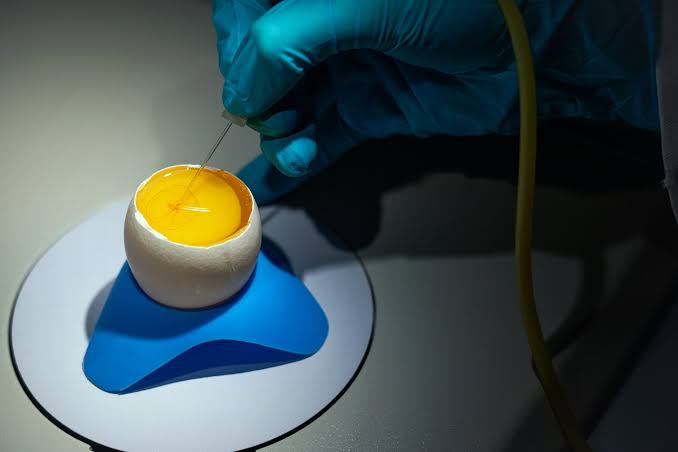
Neion Bio, the New York company that engineers hens to make biologic drugs in their egg whites, has named John A. Maga its Head of Biologics and CMC. Maga spent nearly 15 years at BioMarin Pharmaceutical, where the company says he held senior roles across analytical and process sciences. At Neion he will lead biologics development and work with partners co-developing complex therapeutic proteins on the company's Raptor platform.
The hire signals an expansion in what Neion is selling. The company came out of stealth in March with a co-development and supply agreement with an unnamed major pharmaceutical company covering up to three monoclonal antibody biosimilars. Neion says its approach can cut cost of goods by up to 10 times and capital spending by up to 100 times against conventional manufacturing. Maga's brief points somewhere else, at innovative proteins that are difficult to express in any system.
"The natural biology of the chicken and egg also gives us a remarkable production environment, with characteristics that are especially valuable for certain complex and innovative proteins," said Sam Levin, Neion's co-founder and chief technology officer.
Raptor edits chickens so that a recombinant protein is made in the oviduct and secreted into egg white. Neion describes the oviduct as a highly specialized protein production organ and the egg as a large extracellular space with little native protease activity. In plain terms, a fragile protein lands in a compartment with few enzymes to break it down. The company believes that suits programs where protein integrity, post translational processing or biological activity are hard to get right. It has not published data comparing proteins made this way with the same proteins made in mammalian cells.
There is a precedent. In December 2015 the FDA approved Kanuma, or sebelipase alfa, for lysosomal acid lipase deficiency. It is made in the egg whites of genetically engineered chickens and was the second FDA approved biologic produced in a transgenic animal, after ATryn from goat milk in 2009. Kanuma is a replacement enzyme for a lysosomal storage disorder, the class of protein Maga built his early career on.
Before BioMarin, Maga spent a decade developing protein targeting technologies for lysosomal storage diseases at Symbiontics and ZyStor Therapeutics. Neion says he took ZyStor's lead program to an open IND. BioMarin bought ZyStor, a Milwaukee company working on an enzyme replacement therapy for Pompe disease, in 2010 in a deal worth up to 115 million dollars.
At BioMarin, according to Neion, he led development organizations across oligonucleotides, gene therapies, recombinant proteins, monoclonal antibodies, peptides and small molecules, and steered technical and regulatory strategy behind two commercial approvals. Neion did not name the two products.
"Most biopharmaceutical manufacturing has been built around a small number of workhorse systems, particularly Chinese hamster ovary cells, because those are what the industry has learned to scale over the past several decades," said Maga.
That is the bet behind the hire. A CHO line is a known quantity to partners and regulators, with decades of process data behind it. A hen is not. Neion's case is that for some proteins the biology of the egg is worth the unfamiliarity, and someone who has carried programs through CMC and approval is the person a partner will want to hear that case from.