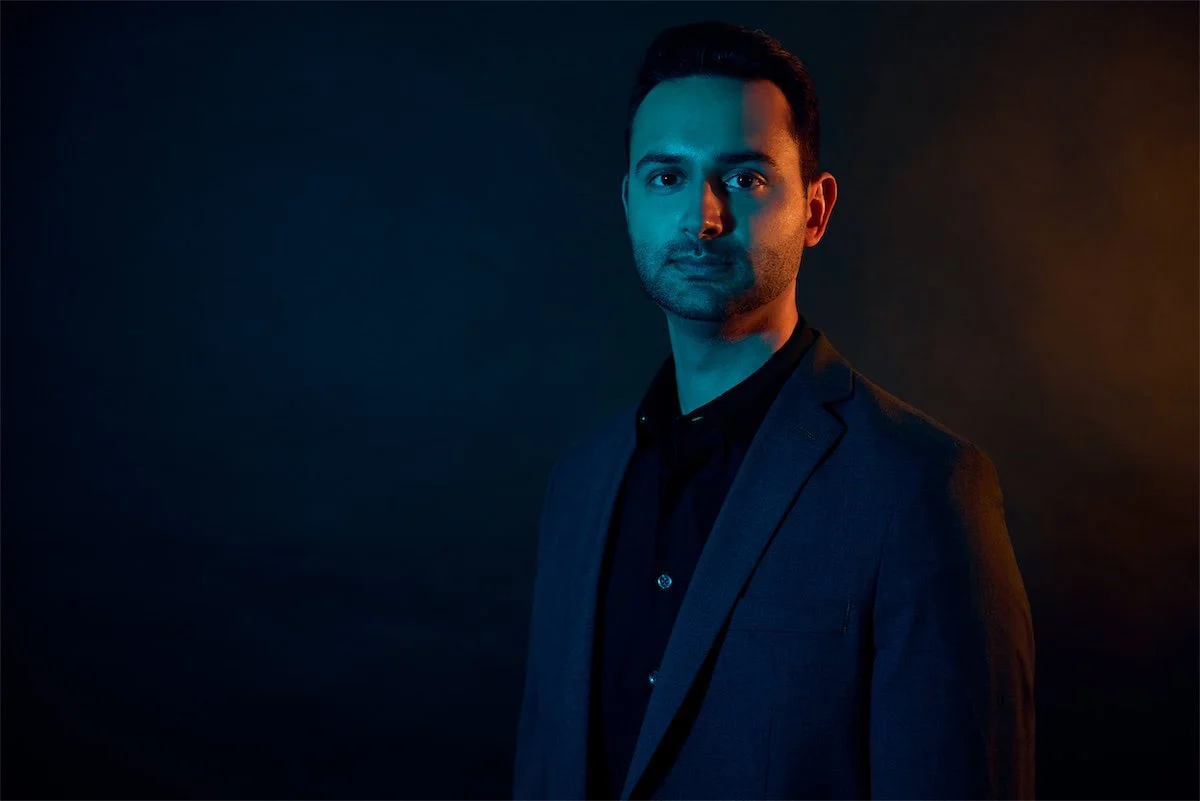
In an exclusive conversation ahead of his appearance at SynBioBeta 2026 on May 4–7 in San Jose, Krish Ramadurai, Partner at AIX Ventures and Oxford-trained biomolecular engineer, frames the problem directly. DNA can now be written and designed with remarkable ease. Understanding why that DNA behaves the way it does within a living system remains the field’s central challenge.
Ramadurai’s career spans academia and industry. He trained at both Harvard’s Belfer Center for Science and International Affairs under former U.S. Secretary of Defense Ash Carter and Nobel Laureate Michael Kremer, and at Oxford’s Institute of Biomedical Engineering, where he focused on multimodal AI simulation frameworks for drug development. He is also the author of four books on applied engineering and medicine. Today, he is a Partner at AIX Ventures, a leading AI-native venture firm that has backed companies including Perplexity, Hugging Face, Weights & Biases, Ambiance Healthcare, Profluent, and Windsurf. Across his career, he has led more than 50 investments spanning healthcare, life sciences, and deep technology, including companies such as Insilico Medicine, bit.bio, and Volumetric Biotechnologies.
The breadth is deliberate. From writing books to leading investments to building predictive AI models, his work is driven by a single conviction: understanding must scale faster than data generation.
“I first encountered synthetic biology during my time at Harvard, when I realized biology could be engineered rather than simply observed,” Ramadurai said. “The idea that you could design life with intent—programming cells to sense, compute, or manufacture—immediately struck me as transformative. But there was a clear gap. We could design sequences, but we couldn’t reliably predict how they would behave in complex biological systems. That tension is what first drew me in, and it continues to drive my work today.”
That tension has become a defining challenge for the field. Fewer than 10% of drugs that enter clinical trials ultimately reach patients, and billions of dollars are spent each year on preclinical programs that fail to yield actionable insights. In his SynBioBeta talk, Opening the Biological Black Box, Ramadurai argues that these outcomes reflect a shared underlying constraint. The biological black box—the inability to explain why a construct behaves as it does in complex systems—and the translatability crisis are not separate problems, but manifestations of the same structural limitation.
"For the first time in human history, we can actually engineer biology from a first-principles basis using AI and begin to turn biology into a coding problem," Ramadurai said. That conviction is what drew him to AIX Ventures, and specifically to co-founder Richard Socher, inventor of prompt engineering, whose vision for techbio aligned closely with his own. At AIX Ventures, Ramadurai backs founders engineering biology through closed-loop AI platforms that bridge the gap between in silico experimental outputs and wet-lab validation. His portfolio thesis centers on mechanistic AI and multimodal systems can generate causal rules rather than correlations. The founders he most wants to back in 2026 are those working on what he calls "Black Box to Blueprint" initiatives, platforms that make interpretability a design criterion from the start.
For synthetic biologists, his message is concrete. Build mechanistically faithful, physiologically relevant model systems that better bridge the gap between petri dish and patient. Design experiments that generate interpretable signals, not just endpoints. And embed explainability directly into automated workflows so that each iteration produces insight, not just data.
"Interpretability is the new scalability," he said. "The next generation of synthetic biology platforms will win by being both mechanistic and measurable."
What distinguishes Ramadurai at the intersection of science and capital is that he brings a research agenda alongside an investment thesis. His message at SynBioBeta is aimed at builders, founders, researchers, and operators working to make biology more predictable. The foundations for opening the biological black box are beginning to emerge, and he is focused on supporting a new generation of techbio founders working to make biological complexity interpretable, predictable, and investable.