Engineered Human Therapies
A Liquid Graft for Every Wound: How AddGraft Is Building a Durable Solution in Rare Disease and Beyond
AddGraft is building a liquid skin graft for RDEB, the rare "Butterfly Disease" that strips skin away from friction as light as a hug. Unlike existing grafts that only fit flat, fixed-size wounds, this one drips on and takes the shape of any site, including the fingers and joints patients need most.

A Butterfly Disease diagnosis happens within the first thirty seconds of coming into the world. Parents get a few minutes to hold their new child before they are taken to the NICU.
“The only explanation given was the name of the disease and the advice to not Google it.”
— Nick Bayhi, PhD
Recessive dystrophic epidermolysis bullosa, RDEB, is caused by a broken COL7A1 gene, which codes for collagen VII. Collagen VII works like biological velcro, holding the epidermis to the dermis underneath it. Without it, a hug, a handshake, or pulling on a t-shirt is enough to strip the skin away as easily as a butterfly’s wing. It is a disease that for 85% of the population has no cure.
A liquid that fits any wound
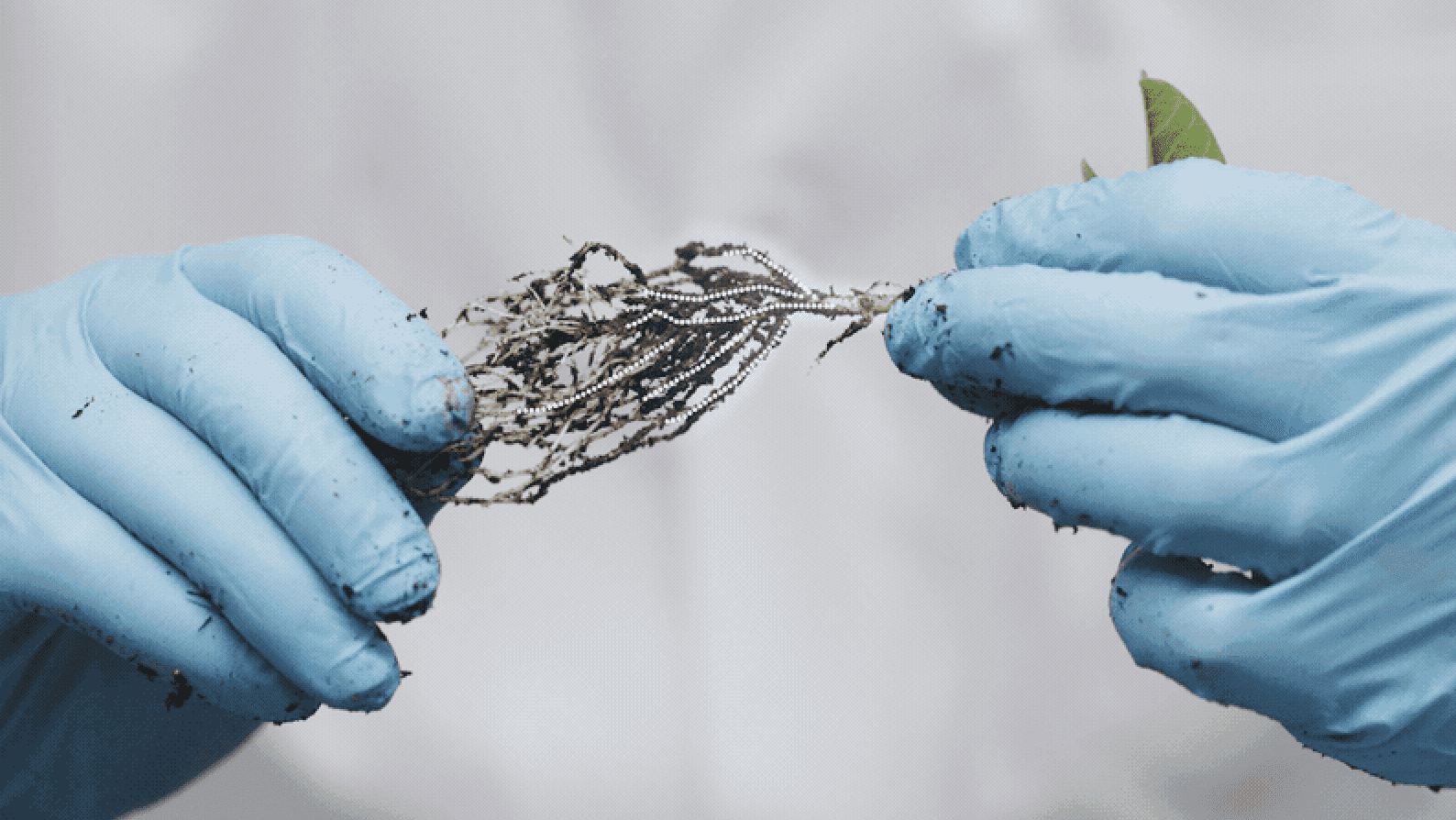
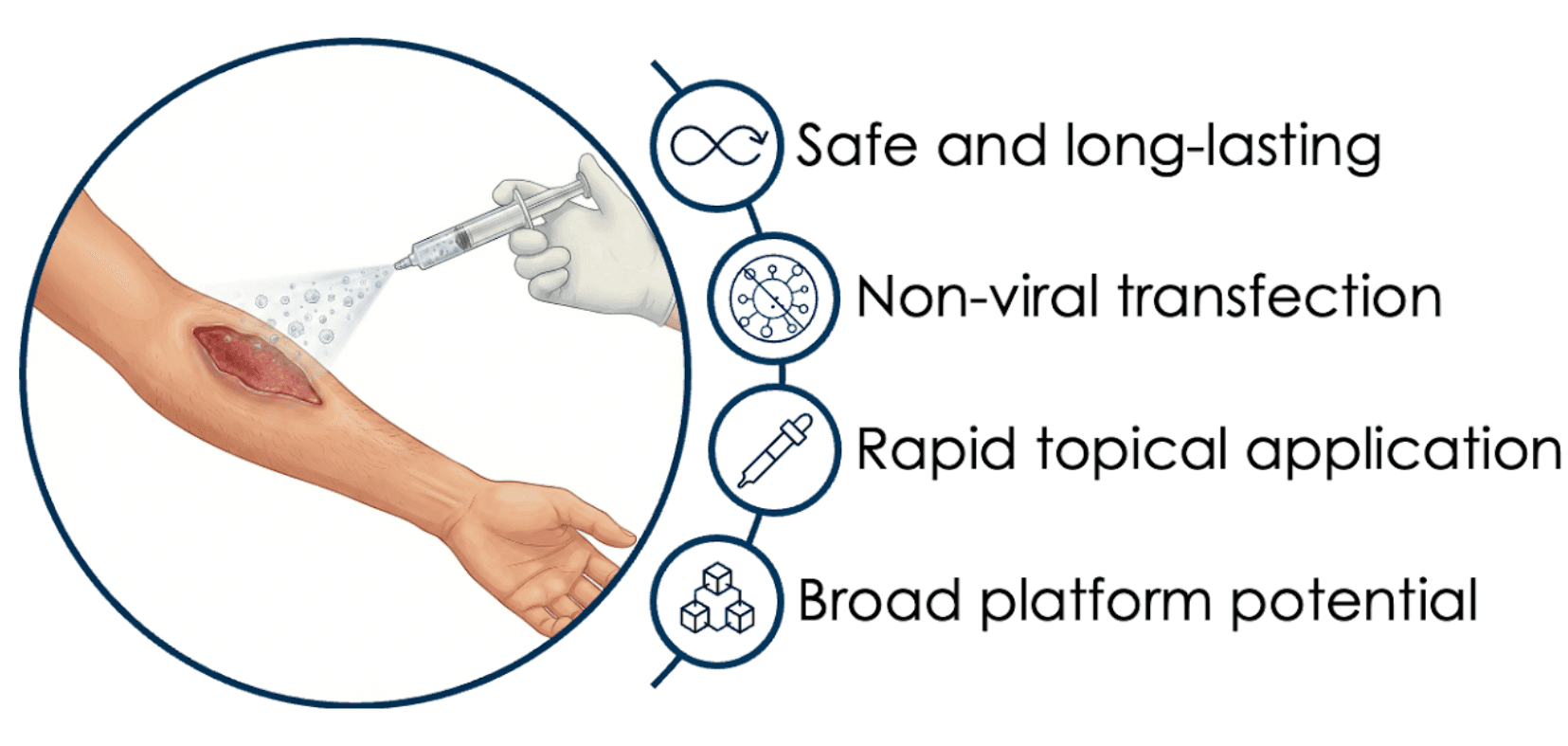
Now picture the fix. A clinician takes a small sample of that same patient’s skin, engineers a healthy copy of COL7A1 back into the cells, and suspends them in a proprietary hydrogel formulation. The clinician simply drips the solution onto the wound, and it takes the exact size and shape of whatever it’s covering. There’s no incision, no sutures, no recovery period spent integrating foreign tissue. It’s closer to getting a mole removed than to surgery, and the patient walks out the same day. Once healed, the tissue is histologically indistinguishable from healthy skin.
How Nick got here
Bayhi met AddGraft for the first time as a venture investor, and passed. The company’s original pitch used the same skin-cell platform to express GLP-1s as a treatment for substance use disorder, engineering patients’ own cells to help cure addiction. The science worked in mice. The go-to-market didn’t.
“I couldn’t imagine figuring out how to gather patients who are so addicted to cocaine that they wander into a hospital asking for their cells to be engineered to make it stop.”
— Nick Bayhi, PhD
The underlying platform stuck with him.
When he crossed paths with the team again after finishing his PhD, the company’s then-CEO offered him the seat: take the science, bring it to a market that could actually support it, and drive the company to its seed round. Bayhi brought a PhD’s fluency in cell and gene therapy paired with a venture investor’s read on where a technology actually fits in the market. The company repositioned around RDEB and set out to bring their liquid graft to patients.
Why the existing cures don't work
RDEB is, functionally, still an orphan disease. Unlike most rare diseases, which have no approved therapies at all, RDEB has three. And yet none of them modify the course of the disease in any meaningful way.
One is a gene therapy cream that speeds wound closure but does nothing to stop new wounds from forming. Another is purely palliative, treating pain and itch, not the underlying defect. The third, approved last year out of Stanford, is the closest thing to a real fix: a full thickness skin graft that permanently repairs whatever site it’s applied to. But it only comes in one shape, roughly the size and dimensions of a credit card, and it’s grown as a self-contained sheet strong enough to be lifted off a plastic dish and sewn onto a patient. That means it’s better attached to itself than it is to the wound. Any friction after implantation is enough to make it buckle off, which is why it can’t be used on fingers, joints, or other high-friction sites where RDEB patients get some of their worst, most recurring wounds. Three approvals, and patients still have no durable way to treat 85% of the wounds they get.
That’s the gap AddGraft’s liquid formulation is built to close. Because it’s dripped on rather than sewn on, it takes the shape of any wound instead of one fixed shape, and it glues engineered cells directly to the wound bed instead of attaching a separate piece of tissue on top. The cells heal into the patient rather than onto them, reaching the exact sites a surgical graft never could.
Beyond RDEB, the same platform can express proteins locally, systemically, or into the bloodstream depending on what’s built into the cells, opening a path toward gene therapy delivered through skin rather than injections or pills: secreted GLP-1s, systemic enzyme replacement, eventually longevity targets that need precise, tunable dosing.
A new thirty seconds
Somewhere, right now, a child is being born who will test positive for RDEB. In the next room, a doctor is rehearsing the same line: the name of the disease and the caution against looking it up, because for most of RDEB's history, there was nothing else to say.
AddGraft is trying to rewrite that script. Not the diagnosis, but the sentence that comes after it. With a liquid graft that can heal fingers and joints as readily as larger wounds, there's finally a durable fix for the sites that affect patients the most, not just the ones that are easily accessible. That's the difference between a name whispered as a warning and one spoken as the start of a treatment course.
Bayhi passed on this company once, as an investor who couldn't see the market fit. He returns as an operator, building a platform that could be the best choice for patients. The next family with an RDEB diagnosis won't be told to avoid Google: they'll be given a plan for what comes next.