Ai Digital Biology
Biopharma Solutions Tools Tech
Benchling Launches Three Products During SynBioBeta 2026 — and Its Head of AI Hints at What Comes Next
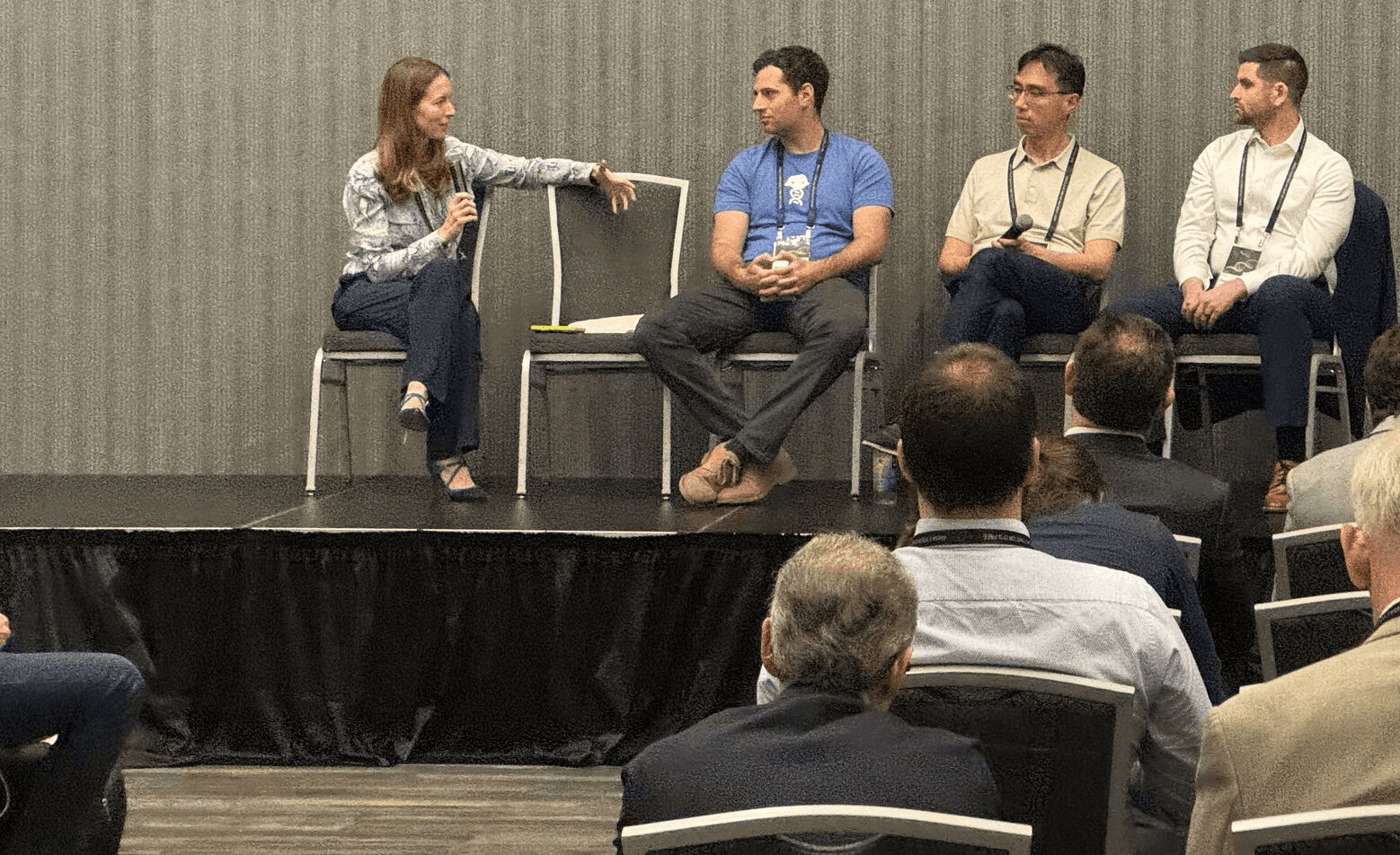
Nicholas Larus-Stone, Bits in Bio founder and Benchling's Head of AI, predicted from the SynBioBeta stage that 75% of all data analysis tasks in biology would be handled by AI agents within a year. Benchling shipped one of the tools to make it real before the conference was over.
San Jose, CA — May 2026 — SynBioBeta 2026 was, as always, a conference about what's coming. But for Benchling, it was also a week to ship.
Over the course of four days in San Jose, Benchling launched three distinct products — One-Click Ordering, Benchling Biologics, and a new Data Analysis skill for its AI platform — while its Head of AI stood on stage and laid out a vision for where scientific software is headed next. Taken together, the announcements represent the most product-dense week in the company's recent history, and a clear signal that Benchling is accelerating its push to become the AI operating system for biotech R&D.
Closing the Gap Between Design and the Wet Lab
The first launch of the week addressed one of the most persistent friction points in experimental biology: the gap between designing something computationally and actually making it.
On May 6, Benchling announced One-Click Ordering — a direct integration with Twist Bioscience, Adaptyv, and Ginkgo Bioworks that allows scientists to design candidates, place orders for synthesis and services, and receive structured results back without ever leaving the Benchling platform. Orders placed through the integration stay connected to their full experimental context: the in silico design, the target, the project history, and every prior result associated with that candidate.
With Twist, the integration covers gene synthesis, antibody expression, binding, and developability characterization. With Adaptyv, it handles protein engineering services including expression, binding, and developability assays, with results returning as structured data within three weeks. With Ginkgo Bioworks — through its Ginkgo Datapoints offering — scientists can submit panels of antibody designs for large-scale developability screening, with results linked directly back to their originating designs in Benchling.
"The lab needs to work differently if science is going to move at the pace AI enables," said Ashu Singhal, co-founder and president of Benchling. "Scientists should be able to design an experiment, order it without leaving their notebook, and have results flow back seamlessly to guide their next decision."
Ordering with Twist Bioscience and Adaptyv is available now in early access. Ginkgo Bioworks integration is expanding later this year.
Rebuilding Antibody R&D from the Ground Up
Five days later, at the PEGS Boston Summit, Benchling announced Benchling Biologics — an end-to-end platform for antibody R&D built for the speed and complexity the field demands today.
The core problem Benchling Biologics addresses is structural. Antibody R&D has shifted from discovery to design: bispecifics, multispecifics, and novel formats are now standard, and AI is enabling structure prediction, property optimization, and de novo design from sequence. But most R&D systems weren't built for any of this. They lack native support for emerging formats, and the resulting data — fragmented across disconnected tools — is nearly impossible to use for analysis or modeling at scale.
Benchling Biologics fixes that across every stage of the workflow. In discovery, PipeBio — acquired by Benchling — provides a no-code interface for antibody screening, handling everything from sequencing runs to repertoire analytics and early liability identification without requiring dedicated bioinformatics support. In design, scientists can now configure any antibody format in minutes from modular building blocks, with Benchling automatically characterizing and validating each entity — CDR and framework regions, germline gene identification, liability detection — and registering DNA sequences, amino acid sequences, chains, and domains as reusable linked components.
The scale gains are significant. Registering 2,000 bispecifics, a job that takes days in legacy systems, takes under an hour to set up and less than a day to run in Benchling Biologics, with every record returning fully annotated, validated, and consistently structured. For build and test, the platform integrates directly with laboratory automation systems including HighRes, and connects to the One-Click Ordering partners for outsourced work. Every result returns tied to the originating design.
"Most R&D systems can't represent the antibody formats teams are actually working with," said Derek Halliday, Head of Product at Benchling. "Benchling Biologics fixes that. Scientists configure new formats in minutes instead of waiting weeks for engineering, and every antibody registered comes back fully annotated and validated."
Benchling Biologics is available today.
A Prediction Made from the Stage — Then Delivered
The third launch was different. It didn't come with a press release. It came with a prediction.
On May 5, Nicholas Larus-Stone took the stage at SynBioBeta for a panel on AI co-scientists alongside Le Cong and George Peabody of Ginkgo Bioworks, moderated by Anna Marie Wagner of Transfyr. The panel covered the diffusion of automation in labs, the overrated role of literature search, and how much genuine novelty an AI system can produce. Larus-Stone's takes were pointed: a good AI scientist should be useful regardless of automation level; literature search is a small part of a long process and most companies are working on science that hasn't been published; and AI can create more novel science than we expect, if you build the right harness.
Then he made the prediction that landed: within a year, 75% of all data analysis tasks in biology would be done by an AI agent.
Days later, Benchling shipped a Data Analysis skill inside Benchling AI to help make it real. The tool gives scientists an AI agent capable of handling exploratory data analysis — the work that has historically fallen through the cracks between wet lab scientists and dedicated bioinformatics teams. Larus-Stone, who has spent more than a decade building data software for scientists, framed the frustration directly: deterministic software has never been able to keep up with the ever-changing needs of R&D. AI, finally, can.
"I have been building data analysis software for scientists for more than a decade now, and it never fails to surprise — and frustrate — me when deterministic software falls short of the ever-changing needs of R&D," he wrote after the launch. "Luckily, AI is an incredible tool for exploratory data analysis. With the tools and skills we've been building, Benchling AI can now be the data science partner every scientist deserves."
Who Is Nicholas Larus-Stone?
The SynBioBeta moment carries extra weight when you understand where Larus-Stone came from.
In January 2022, he founded Bits in Bio — a nonprofit community at the intersection of software and science that has since become one of the most active life sciences tech communities in the Bay Area and beyond. He remains its president today. In September 2022, he founded Sphinx Bio, building software infrastructure for scientific data. In April 2025, Benchling acquired Sphinx Bio, and Larus-Stone joined as a software engineer before being named Head of AI in November 2025.
In other words, the person Benchling put on the SynBioBeta stage to represent its AI vision is a community builder turned founder turned acquired founder — someone who has spent years thinking about what scientists actually need from their software, and who now has the platform to build it at scale.
The same week Larus-Stone was on stage in San Jose, Prime Medicine was presenting at the ASGCT Annual Meeting in Boston about how they used Benchling's AI Scientist to compress months of assay validation work into days — synthesizing four years of experimental data to map evidence to FDA validation requirements, design targeted follow-up studies, and generate a living validation package for their BLA submission. Larus-Stone reposted the news with a characteristically direct take: "Let's cut through the hype: here's an example of AI actually bringing medicines to patients faster."
What It All Adds Up To
Three products in one week. A stage prediction delivered before the audience left town. A real-world case study shipping at the same moment at another conference across the country.
Benchling's message at SynBioBeta 2026 was consistent across all of it: the infrastructure for AI-driven R&D is no longer theoretical. The data foundation is there. The agents are there. The integrations between digital design and physical execution are there. What's left is scientists deciding to use them — and Benchling is doing everything it can to remove the reasons not to.
For the Bits in Bio community in particular, the week had a particular resonance. One of their own is now building the tools. And he's moving fast.
About Benchling
Benchling is the AI platform for biotech R&D, unifying scientific data and automating workflows to accelerate discovery and development. Trusted by more than 1,300 companies worldwide — from pioneering startups to global leaders like Merck, Moderna, and Sanofi — Benchling gives scientists a single place to capture, connect, and act on data across the entire R&D lifecycle. With Benchling AI, agents and models work directly inside scientific workflows, grounded in structured data. The result is faster teams, better molecules, and breakthroughs that reach the world sooner. Benchling was founded in 2012 and is headquartered in San Francisco. Learn more at benchling.com.