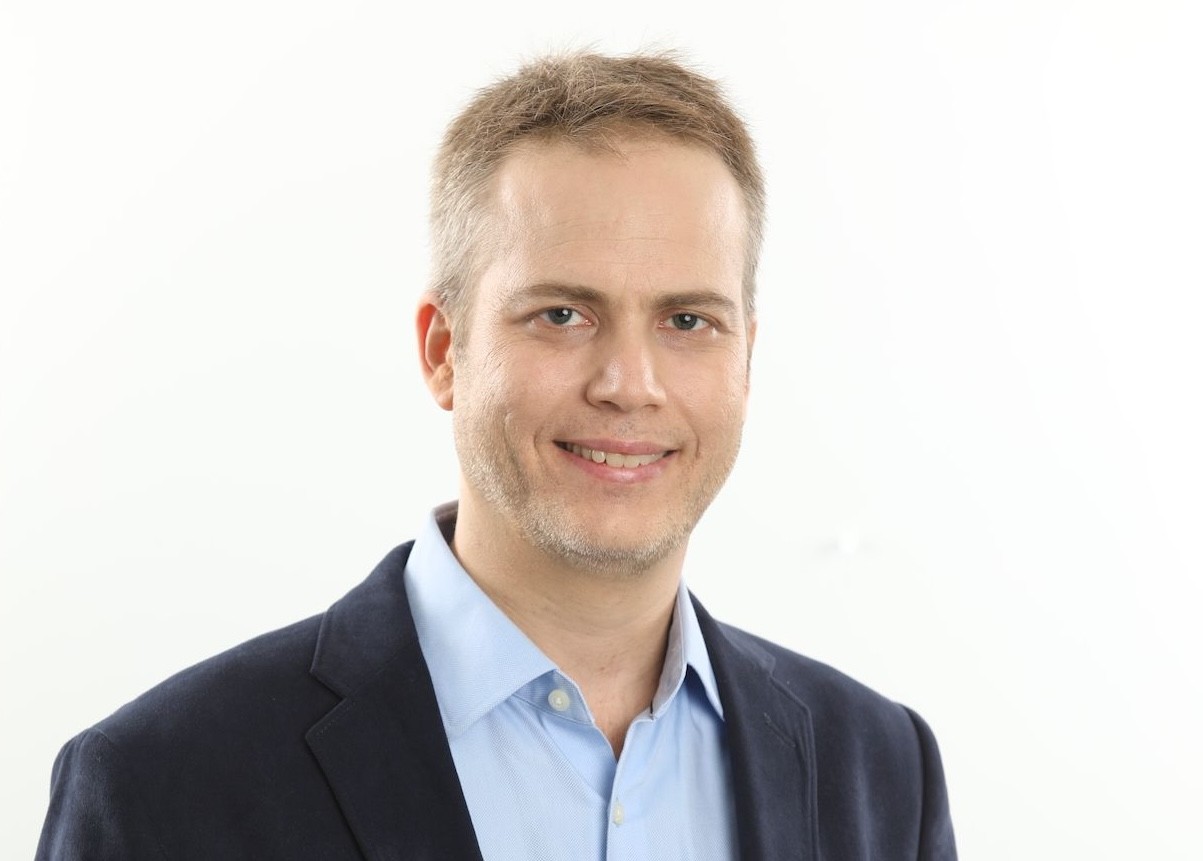
When Micha Breakstone sold his conversational AI company Chorus.ai for $575 million, most founders in his position would have taken a victory lap. Instead, he started asking harder questions. In an exclusive conversation ahead of SynBioBeta 2026 in San Jose, the serial entrepreneur and founder of Cellular Intelligence described how the same instinct that led him to decode human language is now driving his effort to engineer cell fate.
"My cofounders at Harvard and UW showed me that the process by which a single cell becomes an entire human body is governed by a surprisingly small set of signaling pathways," Breakstone says. "Once I understood that, I realized this was an engineering problem hiding in plain sight."
That insight sits at the core of Cellular Intelligence and its flagship platform, the Universal Virtual Cell-Signaling Model. Biology has accumulated decades of detailed maps describing what cells are. What it lacks is a navigation system for predicting where they will go. Modern regenerative medicine still relies on slow, empirical optimization, where researchers test growth factor cocktails and timing regimens one combination at a time, often over years, at costs reaching into the tens of millions of dollars. Breakstone's argument is that biology has hit a complexity ceiling it cannot climb past without a fundamentally different approach.
The ceiling has two sources. First, combinatorial complexity makes systematic experimental mapping nearly impossible when the number of possible signal sequences runs into the millions. Second, context dependence means that the same signal can produce completely different outcomes depending on the prior state of the cell. Most existing virtual cell efforts, Breakstone notes, are context-agnostic. They maximize the number of perturbations within a narrow subset of unrepresentative cancer cell lines, and sacrifice the physiological relevance required to truly engineer cell fate.
Cellular Intelligence attacks that problem from a different angle. The company uses pluripotent stem cells, which can adopt virtually any cellular state during differentiation, as its experimental substrate. A proprietary multiplexing platform allows Cellular Intelligence to take stem cell colonies and split and pool them through successive treatment steps, with each colony associated with a unique barcode that records its full treatment history. The result is an exponentially expanding dataset generated with only linearly increasing effort. In 2025, CI screened more than one million sequential perturbation combinations in a single run, a scale that, according to the company, no comparable effort has matched. Across that dataset, cells populated every major embryonic lineage, and the team even recovered rare notochord-like cells that were only described in the literature in late 2024.
The model trained on that data functions as a computational twin of living cells, taking an initial cell state and a signal as input and outputting a predicted future state, including transcriptome-level changes. Transformer architectures attend to the current state of the gene regulatory network to determine how a cell will respond to incoming signals, while the roadmap includes a transition to Neural Ordinary Differential Equations for continuous-time modeling and a chemical co-embedding layer that will translate protein-level signaling logic into small-molecule drug logic.
For the SynBioBeta audience, the near-term implications are concrete. CI estimates it can compress protocol development timelines for regenerative therapies from years to months, with potential applications spanning dopaminergic neuron manufacturing for Parkinson's disease, beta cell production for type 1 diabetes, and context-specific drug response prediction that flags toxicity before treatments reach clinical trials. The platform can also be run in reverse, identifying small-molecule interventions that compensate for genetic defects by restoring disrupted signaling circuits.
"A new era in AI x Bio is not a distant future," Breakstone says. "It's upon us."
The ambition is large, but Breakstone is careful to anchor it. His background spans an MSc in mathematics and a PhD in cognitive science, and he has built companies through failure as well as success. When asked about his primary motivation, the answer is characteristically unvarnished. "As audacious as it sounds," he says, "reducing suffering, at least a little."
Micha Breakstone will present at SynBioBeta 2026, May 4 to 7 in San Jose. You won’t want to miss it.