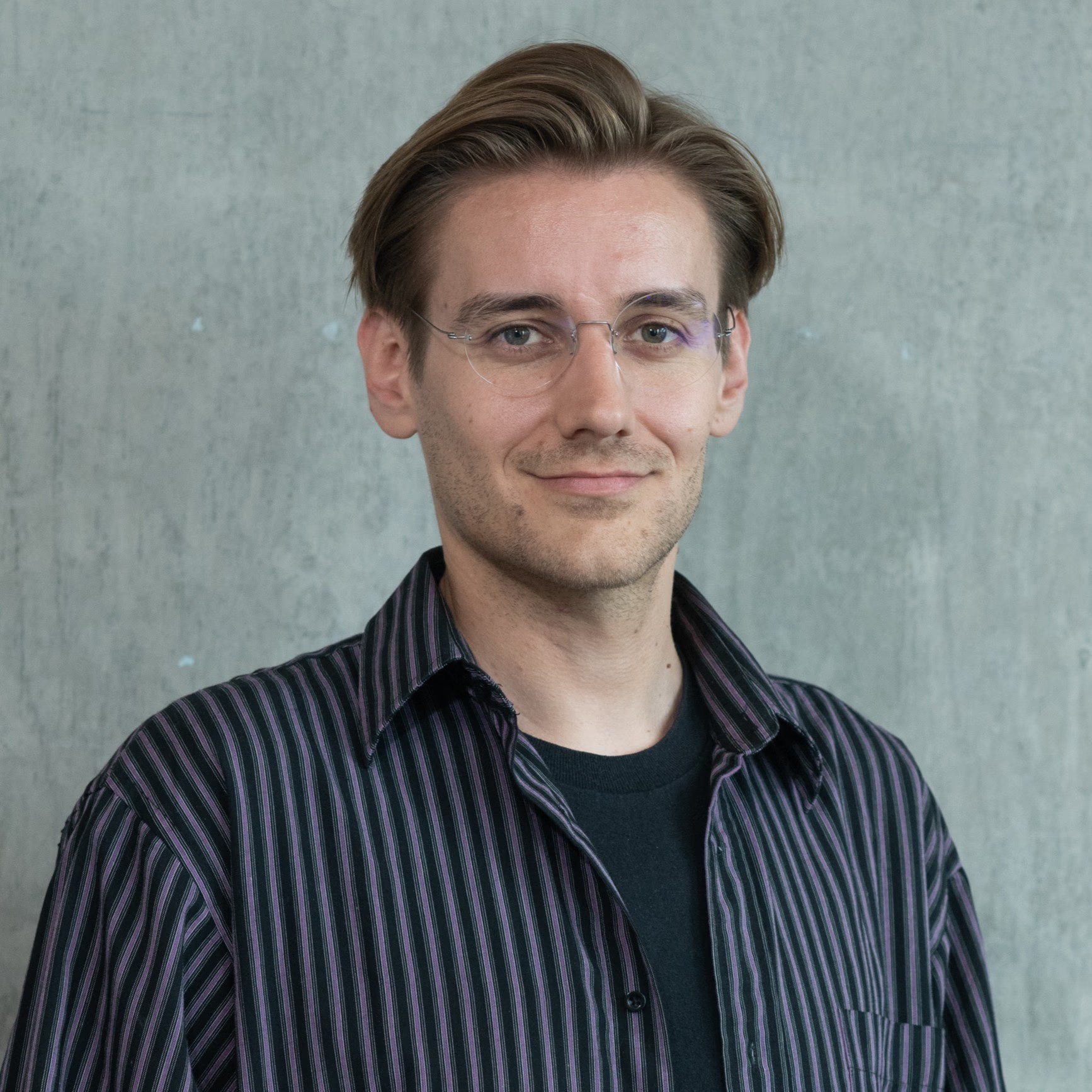
Simon Kohl has a precise way of describing what Latent Labs is doing, and it does not involve hedging. "I want to help transform biology from a field defined by what we can discover into one defined by what we can build," he says. For the founder and CEO of Latent Labs, and an alumnus of DeepMind's Nobel Prize-winning AlphaFold2 team, that sentence is not a vision statement. It is a description of work already underway.
Kohl will share that work at SynBioBeta 2026 in San Jose, May 4-7, and the timing is deliberate. His company has spent the past several months accumulating a set of results that shift the conversation from what AI might do for drug discovery to what it is already doing.
Kohl's entry into biology was lateral. He trained as a machine learning researcher at the German Cancer Research Center, building generative models for biomedical imaging, before joining DeepMind and contributing to AlphaFold2. That project solved the protein structure prediction problem that had loomed over biology for decades. It also clarified the next question.
"Solving protein structure prediction was profound, but it also made the next question obvious," Kohl says. "If we can predict how proteins fold, can we design them from scratch?"
Latent Labs is his answer. The company emerged from stealth in February 2025 with $50 million in total funding, including a $40 million dollar Series, with participation from Google Chief Scientist Jeff Dean, Transformer architecture inventor Aidan Gomez, and others. The platform enables researchers to computationally generate therapeutic molecules with the right affinity, developability, and immunogenicity profile from the first design generation, rather than spending years engineering those properties in iteratively.
The headline product from Latent Labs' most active stretch is Latent-Y, an AI agent launched in March 2026. Powered by Latent-X2, the company's frontier generative model for drug-like antibody and peptide design, Latent-Y takes a therapeutic goal written in natural language and returns lab-ready candidate sequences. It handles the key steps: target analysis, epitope selection, candidate design, and computational validation.
The lab-validated results are what give the claims their weight. Across nine targets spanning three campaign types, Latent-Y autonomously produced confirmed nanobody binders against six, achieving a 67% target-level success rate with binding affinities reaching the single-digit nanomolar range. In user studies, PhD-level experts working with Latent-Y completed design campaigns 56 times faster than independent expert time estimates.
One campaign is particularly striking. Given a peer-reviewed publication on blood-brain barrier crossing as its only input, Latent-Y identified the relevant target, reasoned about the published mechanism of action, and designed confirmed binders against human transferrin receptor. No manual curation. No intermediate guidance.
"Latent-X2 gave us the breakthrough," Kohl says. "Latent-Y builds on that foundation with an expert reasoning layer that handles the full workflow autonomously. The result is speed and scale that weren't possible before."
Running frontier generative biology models at this throughput requires infrastructure to match. In March 2026, Latent Labs announced a partnership with NVIDIA and Nebius, deploying on NVIDIA Blackwell B300 GPUs and achieving over four times the training speedup and more than 60% faster inference relative to prior-generation hardware. The gains translate directly into shorter iteration cycles for partner programs.
At SynBioBeta, Kohl plans to speak plainly about what has changed and what has not. He will cover Latent-X2 and Latent-Y, discuss the limits of the current system honestly, and make an argument by analogy. Semiconductors and aircraft both moved from build-test cycles to computational design before fabrication, and that transition changed what was worth attempting.
"I hope they leave with a concrete sense that a threshold has been crossed," Kohl says, "not as a future promise, but as something we can demonstrate with lab-validated results today."
Over the next twelve months, Latent Labs plans to close the loop with experimental feedback and integrate more tightly with robotic laboratories. The bottleneck in drug discovery, Kohl argues, is no longer finding a molecule. It is deciding which targets to go after.