Leroy Hood Built the Tools Biology Needed Most. Now He’s Taking on the Dark Proteome
In an exclusive conversation ahead of his appearance at SynBioBeta 2026 on May 4-7th in San Jose, Leroy Hood made a bold prediction. The pharmaceutical industry, he argues, is about to be remade by peptide drugs, and the data needed to select them is locked inside the dark proteome, the layer of human biology that conventional tools cannot yet read.
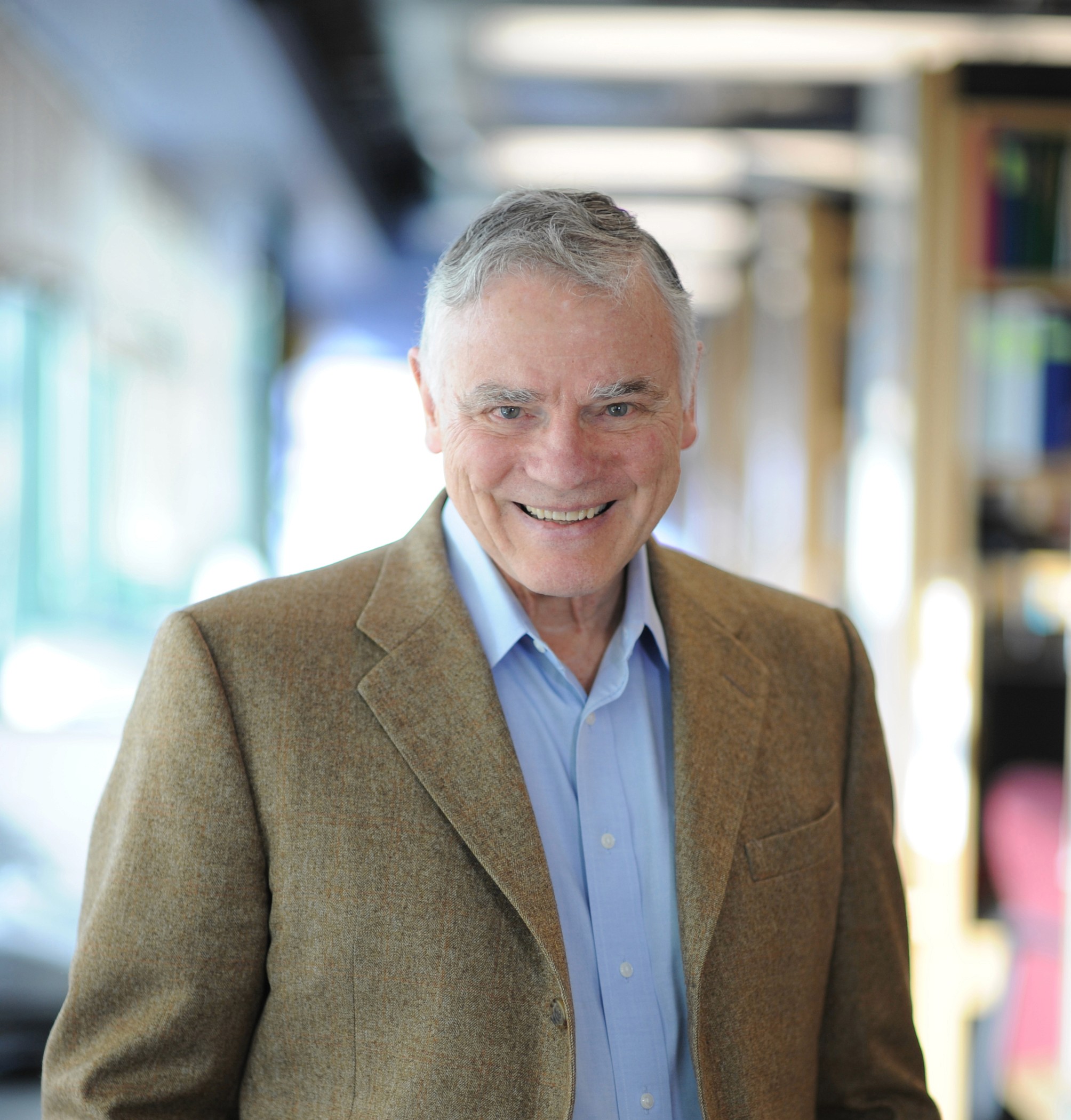
In an exclusive conversation ahead of his appearance at SynBioBeta 2026 on May 4-7th in San Jose, Leroy Hood made a bold prediction. The pharmaceutical industry, he argues, is about to be remade by peptide drugs, and the data needed to select them is locked inside the dark proteome, the layer of human biology that conventional tools cannot yet read.
The 87-year-old founder of the Institute for Systems Biology and one of the architects of the genomics revolution will take the Main Stage on Wednesday, May 6th at 9 a.m., alongside Jennifer Dionne of Stanford and Pumpkinseed Technologies, Susan Klaeger of Genentech, and Michael Koeris of DARPA, for a session on the dark proteome and why protein and peptide analyses are the next frontier in biology.
Few scientists have more standing to say so. Over six decades, Hood has built many of the tools that made modern biotech possible. As a professor at Caltech in the early 1970s, he and his collaborators developed four automated instruments, a gas-phase protein sequencer, a DNA synthesizer, a peptide synthesizer, and the first automated DNA sequencer. All four were commercialized through Applied Biosystems and set the foundation for future genomics, proteomics, and drug discovery. The 1986 automated DNA sequencer enabled the Human Genome Project. The peptide synthesizer made possible the synthesis of HIV protease, which Merck used to develop the first generation of protease inhibitors for AIDS. The DNA synthesizer, together with a 200-fold increase in protein sequencing sensitivity, led to the cloning and characterization of genes that opened entire new fields of human biology, erythropoietin, the first billion-dollar protein drug, the human platelet-derived growth factor that led to the oncogene theory of cancer, and the acetylcholine receptor gene that opened the broader study of human neurobiology receptors. Hood had four papers in a single issue of Science describing such advances.
Hood is one of only fifteen scientists ever elected to all three U.S. national academies. He has helped found roughly twenty companies, including Amgen and Applied Biosystems, and his honors include the 1987 Lasker Award, the 2002 Kyoto Prize, the 2003 Lemelson-MIT Prize, and the 2011 National Medal of Science, presented to him at the White House by President Barack Obama.
Asked how he describes what he actually does, Hood resists the easy labels.
"I am interested in deciphering human complexity in terms of wellness and disease. I have done lots of fundamental biology, molecular immunology, and systems biology. I have also developed the technologies that led to big data and the ability to decipher human complexity to facilitate wellness or avoid disease. My passion is to see a healthcare of optimizing wellness and avoiding disease that transcends our current 90 percent focus on disease care. I guess you would describe me as a multi-disciplinary human biologist."
That orientation is now pulling him toward proteins. The human genome contains roughly 20,000 protein-coding genes, but the resulting proteome is estimated to contain far more than a million distinct proteoforms when accounting for alternative splicing and post-translational modifications. Most have never been directly sequenced. Mass spectrometry, the industry standard, captures only a fraction of what circulates in plasma at any moment, and proteoforms cannot be amplified the way DNA can from a few copies.
That gap, between what the genome encodes and what the body actually expresses, is the first of three challenges that make the dark proteome hard to read. The second is structural. At least half of the human proteome is intrinsically disordered, which makes the structural prediction tools that have transformed biology over the last five years largely irrelevant. The third is the recent discovery of more than 10,000 small peptides, each shorter than 100 amino acids, intrinsically disordered, and with functions that are almost entirely unknown. Each challenge is its own frontier. Together, they explain why current tools cannot sequence most of human biology.
A new generation of protein sequencing platforms is beginning to close the gap. Pumpkinseed, whose CEO and cofounder Jennifer Dionne will share the stage with Hood, uses silicon nanophotonic chips and label-free Raman spectroscopy to read the vibrational fingerprint of individual peptides. DARPA, where Koeris sits, launched its PROtein SEquencing program, known as PROSE, in early 2026 with the goal of building integrated microsystems that can read long proteins de novo, without reference sequences, at greater than 99 percent accuracy across at least 300 amino acids and a throughput target of 10 billion residues per day by the end of the program. The agency frames the work as a national security capability for detecting engineered biothreats that conventional genomic identification methods miss.
For Hood, the prize is therapeutic. He told SynBioBeta he is "pioneering" a new peptide drug company built on the assumption that intrinsically disordered peptides will allow binding to the entire proteome, only 5 percent of which has been targetable by small molecules and conventional protein drugs.
"The enormous revolution that will come in the next 10 years about peptide drugs," he said, "will absolutely transform the entire pharmaceutical industry."
The bet has commercial precedent. GLP-1 peptide therapeutics such as semaglutide and tirzepatide have already redrawn the metabolic disease market and are reshaping investment patterns across oncology, neurology, and rare disease. Companies have raised hundreds of millions of dollars to design therapeutic proteins with AI, which Hood expects will play a central role in his own discovery work. His wager is that sequencing the dark proteome will surface peptide leads that conventional small-molecule pipelines have missed.
Hood's work extends beyond drug development. He has spent the last fifteen years arguing that healthcare must shift from disease care toward wellness, prevention, and what he calls scientific wellness, the integration of genomics, longitudinal phenome data, and AI-driven analysis to detect chronic disease years before clinical onset. That work continues at Phenome Health, the nonprofit he founded in 2021 to launch the Human Phenome Initiative, a proposed follow-on to the Human Genome Project that aims to scale to one million participants over ten years.
Asked what frontier excites him most beyond his current projects, his answer was characteristically expansive.
"The ability to trigger appropriate state changes in cells, organs, and eventually individual humans. The most interesting whole human state transition would be from older back to younger."
It is the kind of claim that traces back to the advice Hood received from his doctoral advisor William Dreyer at Caltech, that anyone who wants to practice biology on the leading edge has to invent the tools for it. Tools first, then the biology, then the medicine that follows. For the biotech professionals and investors trying to read where the next decade goes for protein sequencing, the SynBioBeta panel is not one to miss.