Capital Markets
Biopharma Solutions Tools Tech
Pumpkinseed Raises $20 Million Series A to Build the Read Layer for Protein Biology
Nanophotonic chip platform sequences any protein without a reference catalog. Genentech, DARPA, and BARDA are already under contract.
Ahead of their appearance at SynBioBeta 2026, May 4-7th in San Jose, Pumpkinseed announces a $20 million Series A funding round to scale deSIPHR, its nanophotonic chip platform for protein sequencing at single-molecule resolution without reference catalogs.
Pumpkinseed calls itself The Biology Mining Company. The thesis is that there is an entire functional data layer embedded in every cell and tissue that existing tools cannot extract. The company's deSIPHR platform, a nanophotonic chip fabricated with standard semiconductor manufacturing, reads proteins at single-molecule resolution without reference catalogs, including post-translational modifications, non-canonical amino acids, and single-cell detail.
The company has raised $20 million in Series A funding to scale the platform. The round was co-led by NfX and Future Ventures, with participation from Base4, ADVentures (the corporate venture arm of Analog Devices), and Stanford, among others. The funding will accelerate deSIPHR from peptide-length reads to full-length protein sequencing, expand biopharma and biosecurity partnerships, and advance the AI models being built on Pumpkinseed's proteomic datasets.
"We founded Pumpkinseed on a single conviction: biology's biggest bottleneck isn't wet lab capability or compute, it's actionable information density per cell per dollar" co-founder Jen Dionne said. "deSIPHR is built to remove that bottleneck, reading protein sequence and structure directly from molecular vibrations."
The chip carries over 100 million sensors per square centimeter. Each sensor concentrates light into a volume smaller than a single protein, amplifying Raman scattering to make single-molecule detection practical. Because the chips use standard semiconductor fabrication, the platform inherits chip-industry scalability rather than requiring exotic infrastructure.
Pumpkinseed has already secured over $12 million in committed near-term revenue through active contracts with Genentech, DARPA, and BARDA, spanning immunology, precision medicine, and rapid biothreat detection. For a company at the Series A stage, that contract base is notable.
"Pumpkinseed can close the measurement gap between what a real-world biological sample contains and the digital input needed for AI models" said Omri Amirav-Drory, General Partner at NfX.
Steve Jurvetson and Maryanna Saenko at Future Ventures: "When the proteome becomes fully legible at scale, the consequences ripple across medicine, biology, and AI in ways we are only beginning to map."
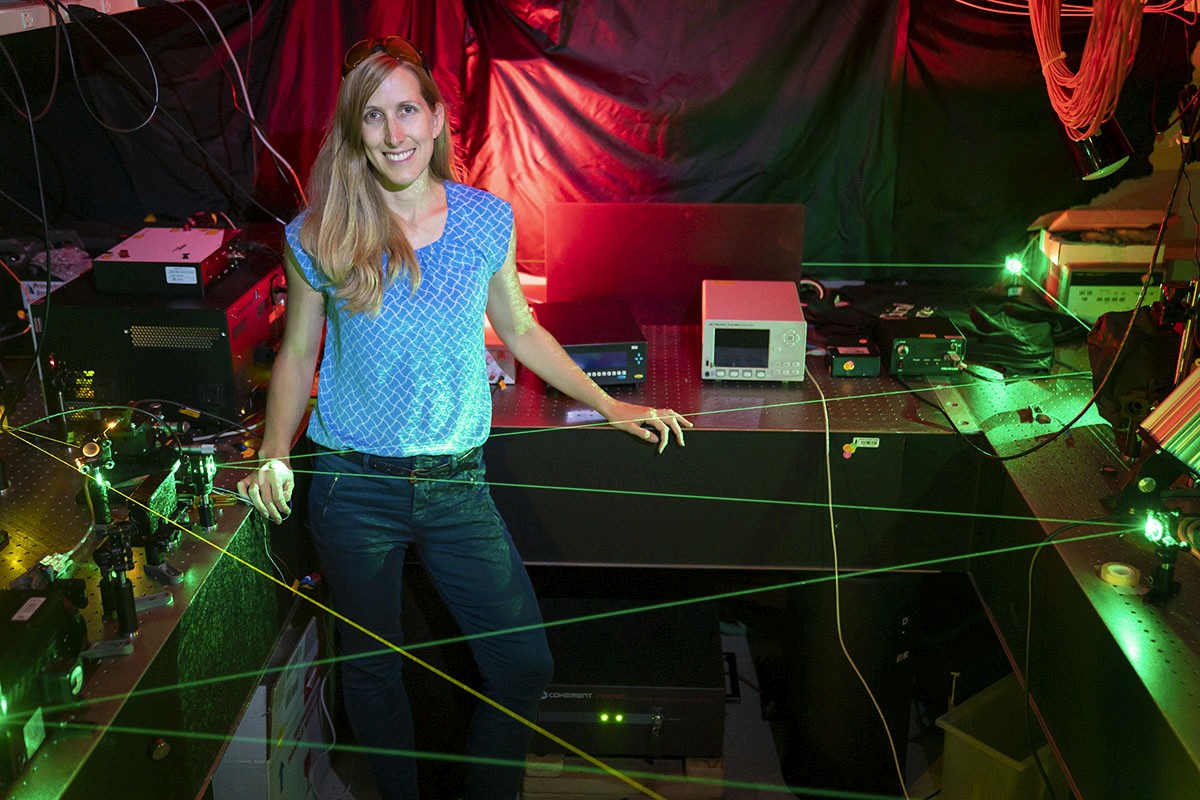
The company is expanding its team in Palo Alto. Pumpkinseed was co-founded by Professor Jen Dionne (Stanford Engineering, CZ Biohub), Dr. Jack Hu (Forbes 30 Under 30), and Dr. Nhat Vu (formerly Google and Nest).
Prof. Dionne is in San Jose this week for SynBioBeta 2026.